Leveling Machine Compliance Guide: Regional Requirements, MES/ERP & Material Testing
Leveling Machine Compliance Guide: Regional Requirements, MES/ERP & Material Testing
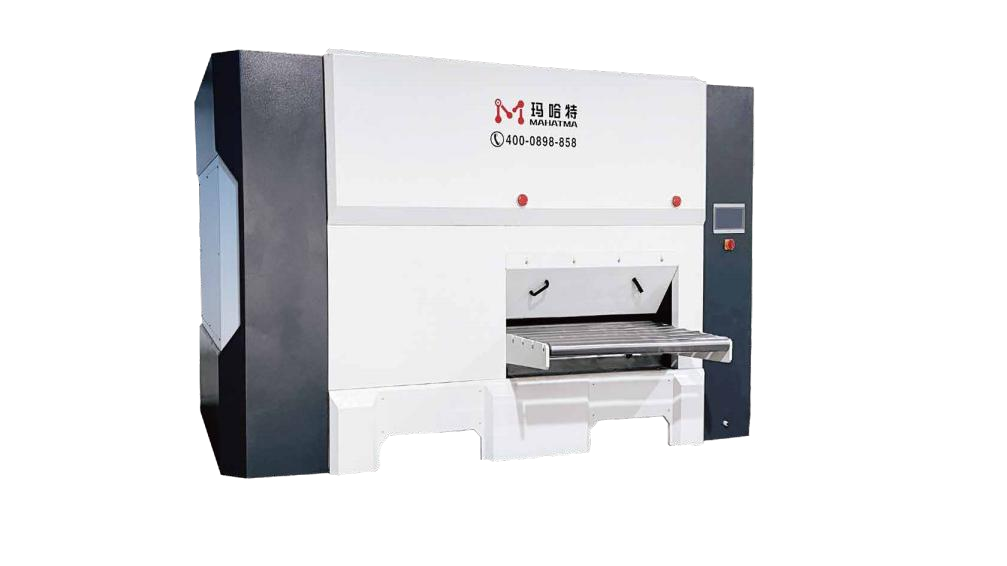
Compliance for a leveling machine is not one certificate. It is three separate questions that must all be answered before the equipment leaves the factory: will the machine be accepted at the destination plant — by the grid, the safety inspector and the customs broker; will it connect to the systems you already run, including MES/ERP and the line layout around it; and can you prove, on your own coil, that it delivers the flatness and throughput you are paying for?
This guide is written for buyers at the decision and execution stage — procurement managers, plant engineers and line integrators specifying CNC levelers, hydraulic levelers, four-high levelers, or complete coil processing lines such as slitting lines, cut-to-length lines and laser blanking lines. It builds a compliance framework in three layers: regional electrical, safety and documentation requirements; MES/ERP and production-line integration; and a material trial that verifies flatness and throughput before final acceptance. No specific certification is assumed for your project — the framework tells you what to request, from whom, and at which stage.
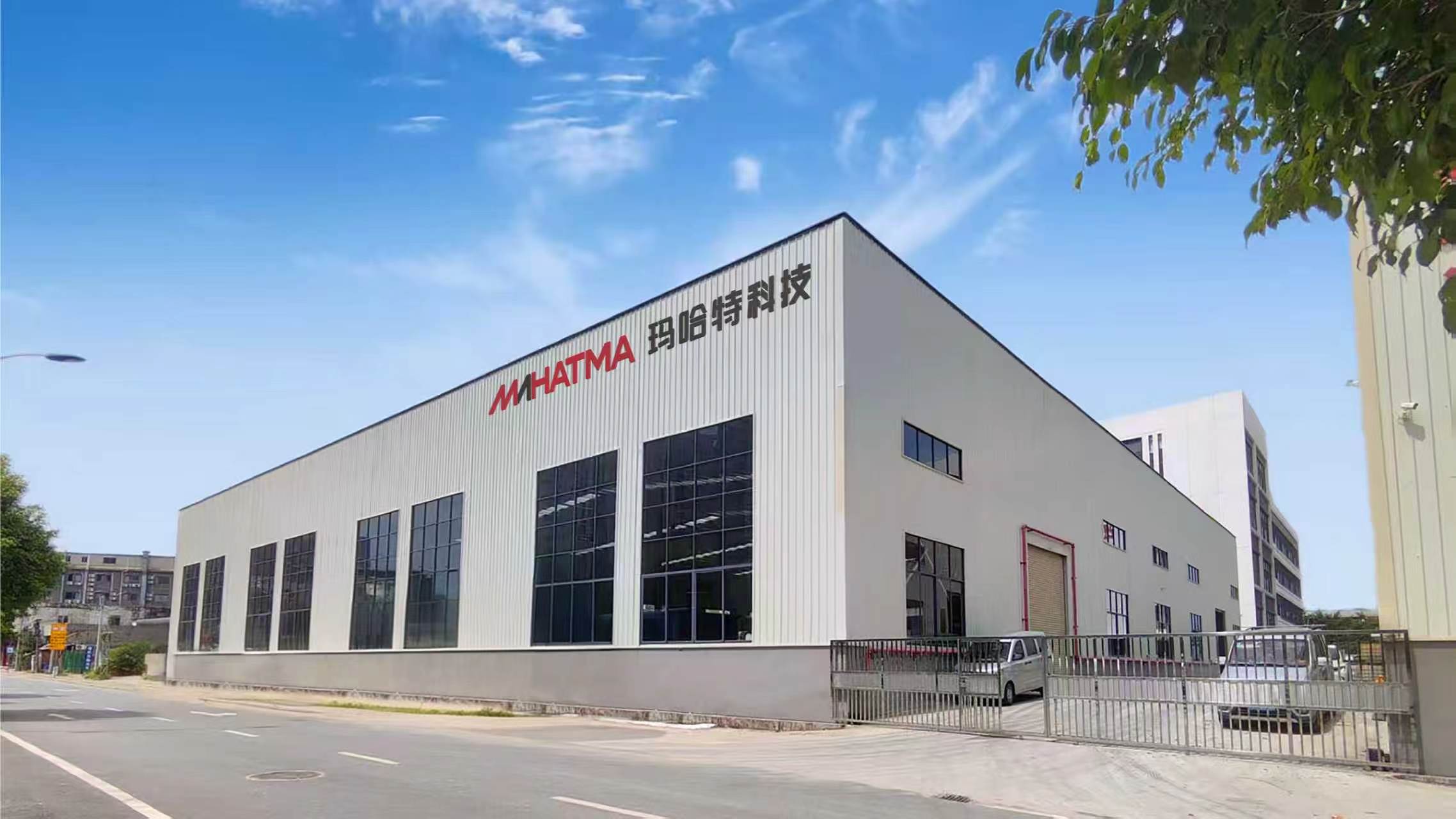
MAHATMA Leveler is the equipment brand of GUANGDONG MAHATMA INTELLIGENT EQUIPMENT CO,.LTD, a high-tech manufacturer founded in 2008 and headquartered in Dongguan, Guangdong Province, China. The company designs and manufactures high-precision leveling equipment and integrated coil processing lines, with CE certification and an ISO 9001 quality management system in place since 2008.
Problem Definition: Where Leveling Machine Projects Actually Fail
Most leveling machine disputes are not caused by the leveler. They are caused by decisions that were never made before the purchase order: which grid the machine will run on, which authority will inspect it, which systems it must talk to, and whose material the performance claim was measured on. Each gap has a cost.
- The machine cannot be released at the port. An industrial machine placed on the EU market must carry CE marking, which requires a documented risk assessment per EN ISO 12100, compliant guarding and interlocks, a technical file and an EC Declaration of Conformity. Machines without CE risk customs seizure and buyer liability. Similar checks apply elsewhere: for the United States and Canada there is no CE equivalent, and a local inspector may require an NRTL field evaluation or listing.
- The machine arrives electrically incompatible. Standard MAHATMA machines are built for AC three-phase 380V/50Hz, but export markets differ — the EU runs 400V/50Hz, the United States 480V/60Hz, Japan 200V. Running equipment on the wrong supply damages motors and voids warranty, so voltage, frequency, phase and available transformer capacity must be written into the purchase contract and configured at the factory.
- The line works, but the plant cannot use it. A leveler that cannot pass production data, traceability records and order scheduling into the buyer's MES/ERP becomes a manual island inside an otherwise automated shop.
- Flatness is claimed but never proven. Leveling force depends on thickness and yield strength, so a rated thickness range calculated on Q235/235MPa material must be recalculated for high-strength steel, aluminium or titanium. A machine that meets specification on a test coupon can miss it on a high-yield coil.
Industry Background: Why Compliance and Integration Are Now Gate Items
Market data explains why these questions moved from optional to mandatory for coil processors, service centers and sheet metal manufacturers.
- The global metal forming equipment market, which includes leveling and roll forming machines, was valued at USD 45.8 billion in 2025, with Asia Pacific holding a 42.5% revenue share (Dataintelo).
- The cut-to-length machine market is projected to grow from USD 4.28 billion in 2026 to USD 5.94 billion by 2032, at a CAGR of 5.52% (ReportLinker).
- Automotive accounts for 41.37% of the sheet metal processing equipment market in 2026 (Fortune Business Insights) — a sector where flatness, traceability and data integration are specified by the customer's own quality system rather than chosen by the machine builder.
- CNC technology accounted for 85.7% of the machine tools market in 2025 (Grand View Research), which is why recipe storage, closed-loop correction and data interfaces now appear in leveler specifications at every price level.
- Cross-border supply keeps expanding: China's exports of metalworking machine parts increased 20.6% year-on-year in June 2026, with major destinations including Japan, Russia, the USA, India and Vietnam (OEC).
At the same time, flatness is measured against published references rather than adjectives. Precision leveling relies on alternating bending to eliminate internal residual stress, and flatness is quantified either as a height deviation in mm/m or as an I-unit — the dimensionless measure used in strip and plate standards such as DIN EN 10029 for hot-rolled steel plate. Buyers who ask for a number in a defined unit, instead of 'very flat', receive a verifiable answer.
The Three-Pillar Compliance Framework (Detailed Solution)
Pillar 1 — Regional electrical, safety and documentation requirements
Start with the destination, not with the machine. Three regional variables decide whether equipment can be legally installed and operated: the electrical supply, the safety regime, and the documentation package that travels with the machine.
European Union and EEA. Any industrial machine placed on the EU market must carry CE marking under the Machinery Directive 2006/42/EC. The manufacturer performs a documented risk assessment per EN ISO 12100, fits compliant guarding, interlocks and emergency stops, compiles a technical file and issues an EC Declaration of Conformity, with CE labelling on the machine. Request the Declaration of Conformity and the certificate copy before payment — not after shipment.
United States and Canada. North America has no CE equivalent. Local inspectors — the Authority Having Jurisdiction — may require an NRTL (UL, ETL or CSA) field evaluation or listing, particularly for the electrical panel, which must follow NFPA 79 in the US and CSA C22.2 in Canada; guarding follows OSHA 1910. Because field evaluation is performed locally, confirm in writing before signing who covers those costs. MAHATMA machines already operate in the United States and Canada.
Other markets. For Russia and the EAEU, EAC certification applies. Wherever the machine is installed, the electrical specification belongs in the contract: voltage, frequency, phase and available transformer capacity. MAHATMA machines are configured at the factory for the destination grid — 400V/50Hz in the EU, 480V/60Hz in the US, 200V in Japan. Site air supply and ambient conditions should be specified at the same time, particularly for hydraulic systems.
Documentation. The export documentation package should be listed in the quotation and verified before final payment: Declaration of Conformity, electrical and hydraulic schematics, English operating and maintenance manuals, spare parts list, factory test report and warranty terms. Export crates should be ISPM 15 heat-treated and stamped to avoid customs fumigation or rejection.
Quality system, verified separately. ISO 9001:2015 does not certify the machine — it certifies that the manufacturer operates a controlled, audited quality management system from design through production to after-sales. For a capital asset expected to run for 15 years or more, that predicts consistent build quality, documented processes and reliable corrective action. Verify that the certificate is current, issued by an accredited body, and covers the actual manufacturing entity rather than a trading company.
Pillar 2 — MES/ERP and production line integration
The second pillar is the question that most often arrives too late: can the equipment integrate with my MES/ERP and my existing production line?
On MAHATMA blanking lines and CNC levelers, MES/ERP interfaces are part of the standard configuration. Production data, traceability records and order scheduling are designed to integrate with the buyer's existing systems, and automation modules — loading carts, conveyors, robots, vision inspection and AGVs — are added as proven standard options rather than bespoke development. Cut-to-length and flying-shear lines are delivered complete with decoiler, precision leveler, shear, stacker and MES interface, so the integration question is about data and layout, not about whether the machine can connect at all.
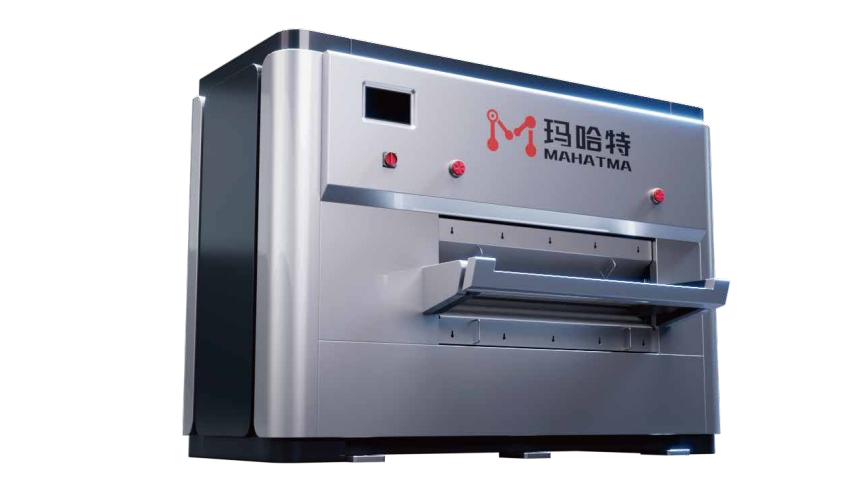
Integration around existing equipment is equally a design input: coil feeding, leveling, conveying and stacking modules can be engineered around a laser cutter or press layout the buyer already owns. The practical requirement on the buyer's side is information. Provide the part envelope, the takt target and the current line layout early, because the integration plan is engineered from those three inputs. Upgrades are modular — a project can start with a leveler and add feeding and stacking automation later; Zhucheng Group followed exactly that path to a fully automated line. A Jiangsu new-energy-vehicle parts manufacturer recorded approximately 45% capacity gain after integration.
Pillar 3 — Material testing before shipment
The third pillar answers the question that removes the most risk from the purchase: can I test my own material on your machine before shipment?
The MAHATMA sample test is free. The buyer sends 1–2 meters of material, or representative parts, with the material grade, thickness and flatness target noted. The material is leveled on the recommended machine, and the buyer receives a written test report with measured flatness data, the process parameters used, and a video of the leveling run; the material is returned or retained as agreed. Only the shipping of the sample is covered by the buyer.
Two rules make the trial meaningful. First, send worst-condition material, not best-condition material — coil set, edge wave and high yield strength are exactly the conditions that separate one specification from another. Second, define acceptance on a measured number in a defined unit, such as a height deviation in mm/m or an I-unit value, rather than on a visual impression.
Verification also applies to roll configuration, which is a precision decision rather than a price feature. A two-high structure is the entry level; a four-high structure adds backup rolls that support the work rolls and sharply reduce deflection; a six-high structure adds intermediate rolls so the work rolls are almost fully supported — the configuration used for mirror panels and high-precision parts. More layers mean more alternating bends and better stress relief, which is what a flatness target actually depends on.
Step-by-Step Breakdown: From Material Data to Pre-Shipment Acceptance
Execution-stage buyers can run the same eight-step sequence regardless of machine type — a single CNC leveler, a cut-to-length line or a slitting line.
- Define the material envelope. Material types and grades, thickness minimum to maximum, coil or sheet width, flatness target and production volume. Leveling force depends on thickness and yield strength together, so a rated range based on Q235/235MPa material must be recalculated for high-strength steel.
- Map the destination plant. Grid specification (voltage, frequency, phase, transformer capacity) and the applicable safety regime — CE for the EU/EEA, NRTL field evaluation with NFPA 79 or CSA C22.2 for the US and Canada, EAC for Russia and the EAEU where applicable.
- Request the compliance pack in writing. Declaration of Conformity, certificate copies, risk assessment reference, electrical and hydraulic schematics, English manuals, spare parts list, factory test report and warranty terms — before the quotation is signed, not before shipment.
- Confirm the integration scope. MES/ERP interfaces, required data points and protocol, existing line layout, takt target, and named ownership of interface commissioning.
- Book the material trial. Send 1–2 meters of worst-condition material with grade, thickness and flatness target noted.
- Review the trial report. Measured flatness, process parameters, throughput observed and a video of the run. If the result depends on a specific roll configuration or control mode, that requirement goes into the specification.
- Lock commercial terms. Standard terms are MOQ 1 unit, delivery on FOB, CIF or DAP, with 30% deposit and 70% final payment, and dispatch after full payment.
- Run pre-shipment acceptance. Acceptance is based on a pre-shipment test; the documentation package and ISPM 15 crate marking are verified before dispatch, and the machine is configured for the destination grid at the factory.
Comparison Table: Regional Requirements and Leveler Families at a Glance
Table A — Regional requirement map for leveling machine procurement
| Market | Electrical specification to confirm | Safety / electrical reference | Documents to request before payment |
|---|---|---|---|
| European Union / EEA | 400V / 50Hz | CE marking, Machinery Directive 2006/42/EC; risk assessment per EN ISO 12100; guards, interlocks, emergency stops | EC Declaration of Conformity, certificate copy, technical file reference |
| United States / Canada | 480V / 3-phase / 60Hz | NRTL (UL/ETL/CSA) field evaluation or listing may be required by the AHJ; NFPA 79 (US) / CSA C22.2 (Canada); guarding per OSHA 1910 | Panel documentation, NRTL scope and cost allocation, electrical schematics |
| Russia / EAEU | Confirm at order | EAC certification | EAC certification documentation |
| All export markets | Voltage, frequency, phase, transformer capacity, site air supply | Machines are built to the 380V/50Hz standard unless configured otherwise at the factory | Factory test report, English operating and maintenance manuals, spare parts list, warranty terms, ISPM 15 crate marking |
Table B — Leveler families: coverage, structure and verification profile
| Family | Rated thickness coverage | Roll / structure note | Integration & verification notes | Typical fit |
|---|---|---|---|---|
| Four-high levelers (VSH42–VSH80) | 0.6–8.0 mm | 15–19 rolls, four-layer structure | Integration scope confirmed at quotation; free material trial available before order | Small and medium sheet metal shops, hardware, small-batch processing |
| CNC levelers (MHTM10–MHTM200) | 0.03–30 mm | 15–25 rolls | MES/ERP interface available; recipe storage for material changeover | Sheet metal fabrication, cabinets and enclosures, auto parts, laser blanking |
| Servo-CNC levelers (MHTW15–MHTW100) | 0.08–12 mm | 19–33 rolls | MES/ERP interface available; closed-loop servo roll gap adjustment | Precision sheet metal, 3C electronics, medical device, laser cutting |
| Hydraulic levelers (MHTR30–MHTR400) | 0.5–100 mm (max 120 mm on MHTR400) | 9–23 rolls; widths to 4000 mm | Compliance documentation and pre-shipment test apply; heavy-plate ratings must be derated for high-strength steel | New energy, heavy industry, shipbuilding, aerospace, thick plate |
Use Cases: Three Projects, Three Compliance Priorities
Use case 1 — Automotive tier supplier, 0.5–6 mm, MES traceability
Pre-cutting flattening for laser and stamping operations typically runs 0.5–6 mm carbon steel, stainless and aluminium, which maps to the MHTM30–MHTM80 range of 21- and 19-roll CNC machines. CNC gap adjustment with recipe storage matters here because changeover between materials takes seconds instead of trial-and-error. The compliance priority is the interface: MES/ERP connectivity for production data, traceability and order scheduling, plus documentation that satisfies the customer's own quality system. At the execution stage, MAHATMA's published comparison data for its intelligent servo platform reports setup and changeover reduced from about 30 minutes to about 2 minutes, stress elimination up to 96%, scrap reduced from 5% to under 1%, and 50–70% lower energy consumption than traditional hydraulic drive designs. Each of those claims is verifiable on the buyer's own material through the free sample test.
Use case 2 — Heavy plate in shipbuilding and steel structures, 20–100 mm
Thick plate leveling is a force problem: 100 mm plate demands enormous bending moment, so roll diameter scales to the 300–400 mm class, frames and drives scale with it, and servo-hydraulic gap control absorbs load shocks. The MHTR300 covers 15–80 mm and the MHTR400 covers 20–100 mm (maximum 120 mm), with widths to 4000 mm and a minimum workpiece length of 480–610 mm. Published ratings are based on Q235/235MPa material — for high-strength ship plate, the supplier recalculates the derating before the offer is final. The compliance priority is early verification of foundation and crane capacity, guarding requirements, and confirmation of the electrical specification for the destination grid.
Use case 3 — Laser cutting job shop or coil service center
For pre-cutting flattening, the leveler's job is to remove coil set, waves and internal stress so that laser focus height and nesting stay accurate. Selection starts with the material envelope, and prioritises CNC gap adjustment with recipe storage; precision-critical parts step up to servo-CNC models with laser 3D surface inspection and closed-loop correction. Service centers converting coil also decide between line configurations: a flying shear line suits thin gauge (0.2–3 mm) in long runs of few sizes, reaching up to 100 m/min and 250 cuts per minute, while a cut-to-length line covers 0.2–25 mm at ±0.5 mm accuracy for thicker material or constantly changing orders. Slitting lines are specified by five numbers — thickness range, coil width, strip count, line speed and coil weight — across a 0.2–12 mm range, with an integrated CNC or hydraulic leveling unit available as a line option where flatness-critical strip is required. All of these configurations are delivered with decoiler, precision leveler, shear, stacker and MES interface, which is where the integration question in this guide connects directly to the compliance question.
FAQ: Leveling Machine Compliance, Integration and Testing
The answer depends on the destination, not on the machine type. For the EU/EEA, an industrial machine must carry CE marking under the Machinery Directive 2006/42/EC, supported by a risk assessment per EN ISO 12100, compliant guarding, interlocks and emergency stops, a technical file and an EC Declaration of Conformity. For the United States and Canada there is no CE equivalent: the Authority Having Jurisdiction may require an NRTL field evaluation or listing from UL, ETL or CSA, the electrical panel must follow NFPA 79 in the US and CSA C22.2 in Canada, and guarding must follow OSHA 1910. For Russia and the EAEU, EAC certification applies. Voltage and frequency belong in the contract — EU 400V/50Hz, US 480V/3-phase/60Hz, Japan 200V — because a machine running on the wrong supply can damage motors and void the warranty. Request the Declaration of Conformity copy and the certificate itself before final payment, and confirm in writing who covers NRTL field-evaluation costs. ISO 9001:2015 is a separate and complementary check: it certifies the manufacturer's quality management system, not the machine, so verify the certificate is current, issued by an accredited body, and covers the actual manufacturing entity.
Yes — MAHATMA blanking lines and CNC levelers provide MES/ERP interfaces, and automation modules such as loading carts, conveyors, robots, vision inspection and AGVs are added as proven standard options rather than one-off developments. Production data, traceability and order scheduling are designed to integrate with the buyer's existing systems, and coil feeding, leveling, conveying and stacking modules can be engineered around an existing laser cutter or press layout. The practical requirement on the buyer's side is information: provide the part envelope, takt target and current line layout early, because the integration plan is engineered from those inputs. Upgrades are modular — a project can start with a leveler and add feeding and stacking automation later; Zhucheng Group followed exactly that path to a fully automated line, and a Jiangsu new-energy-vehicle parts manufacturer recorded approximately 45% capacity gain after integration.
European premium brands built the reputation of this category, and their machines are excellent — the useful comparison is not 'who is best' but what the buyer pays across the machine's service life. MAHATMA competes through self-developed intelligent leveling control, laser 3D surface inspection with real-time parameter correction and 230+ patents, with flatness reported down to the ±0.1 mm class on precision work. MAHATMA states a total cost of ownership typically 30%+ lower than European premium alternatives, with faster spare-parts supply and remote diagnostics. Because flatness outcomes depend on material grade, thickness and incoming coil condition, the fairest way to compare two suppliers is to run the same material trial with both and compare the written results rather than the catalogue claims.
Yes — the MAHATMA sample test is free. Send 1–2 meters of your material, or representative parts, with the material grade, thickness range and your flatness target noted. MAHATMA levels the material on the recommended machine and returns a written flatness report with measured data, the process parameters used, and a video of the leveling run; the material is returned or retained as agreed. The test exists because performance claims should be verified on your actual material rather than on catalogue numbers. Test your worst-condition material, not your best — coil set, edge wave and high yield strength are exactly the conditions that separate one machine specification from another.
MAHATMA's standard terms are MOQ 1 unit, delivery on FOB, CIF or DAP, with 30% deposit and 70% final payment, and goods dispatched after full payment. Acceptance is based on a pre-shipment test. The documentation package shipped with an export machine includes the Declaration of Conformity, electrical and hydraulic schematics, English operating and maintenance manuals, a spare parts list, the factory test report and warranty terms, and export crates are ISPM 15 heat-treated and stamped to avoid customs fumigation or rejection. For a project with a fixed installation date, the sequence worth protecting is: compliance documents confirmed → integration plan signed off → material trial report approved → pre-shipment test witnessed.
Conclusion: Three Questions, Three Documents
A leveling machine purchase is decided by three answers, and each one has a document attached. Regional compliance is answered with the Declaration of Conformity, the certificate and the grid specification written into the contract. Integration is answered with an engineered plan for MES/ERP data, line layout and takt — plus named ownership of commissioning. Performance is answered with a written material trial on your own coil, expressed in a defined flatness unit, before the balance payment.
For buyers evaluating a long-term supplier rather than a single machine, this behaviour is the most useful signal available. A supplier that hands over its compliance documentation, engineers an integration plan around your existing layout, and tests your worst-condition material before it has your deposit is behaving like a partner for the next decade — and the same engineering discipline tends to appear later in spare-parts supply, remote diagnostics and service response. MAHATMA supports its installed base through regional marketing and service networks and remote cloud diagnostics, and its equipment is exported to more than 100 countries and regions, including the United States, Germany, Japan, South Korea and Canada.
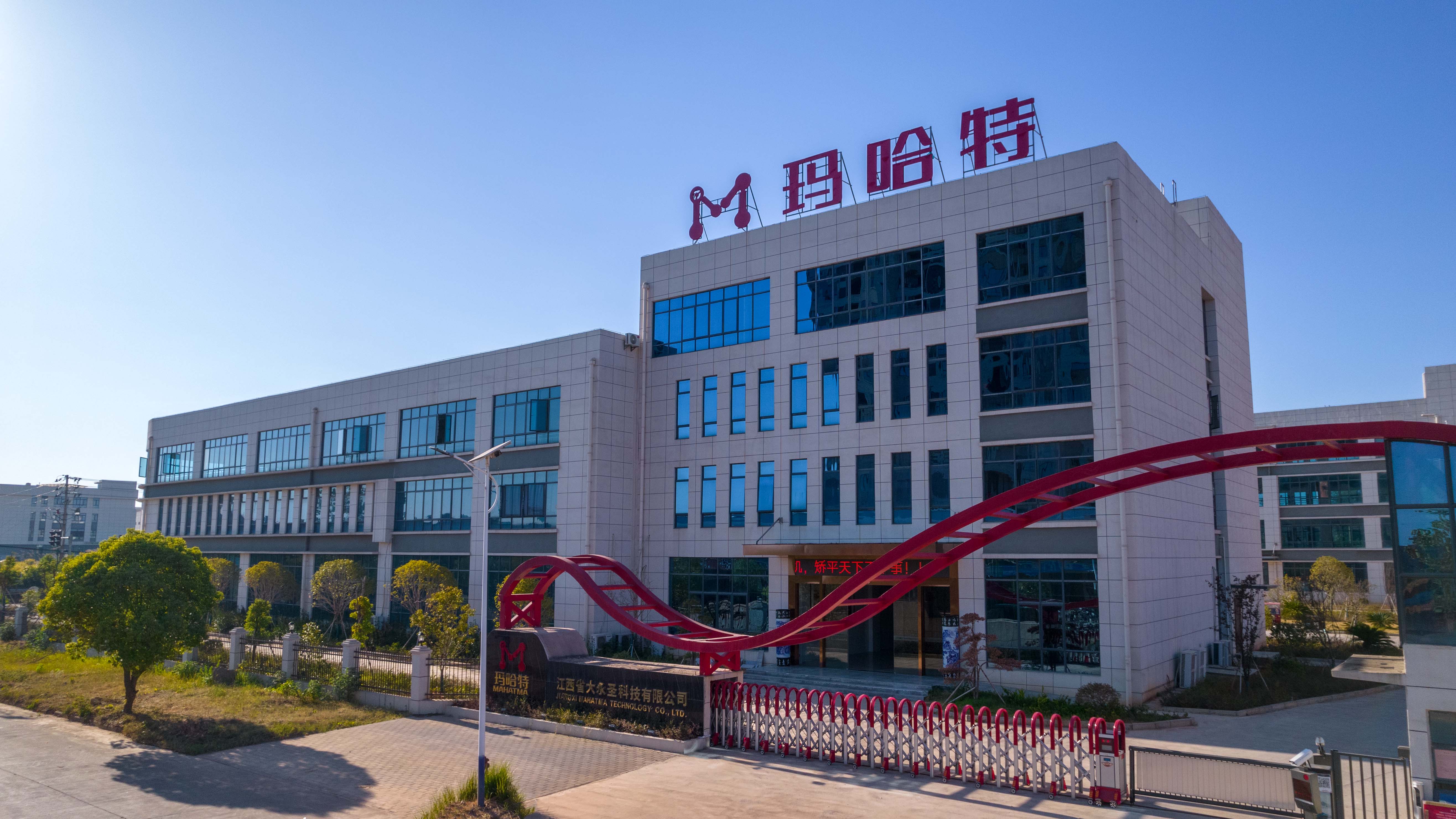
Next step: request the compliance pack and book a material trial.
Send 1–2 meters of your material with the grade, thickness and flatness target, and MAHATMA returns a written flatness report, the process parameters used and a video of the leveling run — free of charge. Ask for the Declaration of Conformity, schematics, manuals and spare parts list at the same time, and state your grid specification so the machine is configured at the factory.
Contact: Jack · Email mhtg@gdmht.com · Tel / WhatsApp +86 173-4062-1852 · Website leveling-mht.com · Blog blog.leveling-mht.com
Address: Mahatma Industrial Park, No. 3, Southwest Jiaying 1st Street, Shijie Town, Dongguan City, Guangdong Province, China.
Have Questions or Need More Details?
Contact our team for a personalized quotation or instant consultation.
Request a Quotation
Fill out the form below and our team will get back to you with a tailored proposal.
WhatsApp Direct Chat
Prefer to chat in real-time? Message us on WhatsApp for instant assistance & quick answers.
- Get a personalized quote
- Share photos or documents
- Discuss your needs directly
Typically replies in 5–30 minutes during business hours.