Leveling Machine Supplier Ecosystem: What to Verify Before You Commit
Leveling Machine Supplier Ecosystem: What to Verify Before You Commit
Answer first: A leveling machine purchase should be judged not only by specifications, but by the supplier ecosystem behind the machine. For buyers in the final decision stage, the practical question is simple: can this manufacturer support the machine through installation, integration, compliance, spare parts, service and future line expansion?
This guide explains what a long-term leveling machine partner must deliver and uses MAHATMA Leveler as a working example of a global supplier ecosystem.
What Is MAHATMA Leveler?
MAHATMA Leveler is the brand operated by Guangdong MAHATMA Intelligent Equipment Co., Ltd., a high-tech manufacturer headquartered in Dongguan, Guangdong Province. A leveling machine, also called a coil leveler, straightening machine, flattening machine or plate leveler, removes coil set, waves and residual stress from metal sheet or plate. MAHATMA develops and builds sheet metal leveling machines, CNC leveling machines, hydraulic leveling machines, straightening machines, cut-to-length lines, uncoiling-leveling-slitting lines, uncoiling-leveling-flying-shear lines and laser blanking lines.
MAHATMA has exported equipment to more than 100 countries and regions. It operates 28 overseas marketing and service networks, making it a relevant case for buyers comparing global supply and after-sales support.
Problem Definition: Why Purchase Price Is Not the Whole Decision
Most leveling machine buying guides focus on thickness range, width, roll count and flatness tolerance. These are necessary, but they do not predict long-term performance. A machine can have the right roll configuration and still fail commercially if the supplier cannot export compliant documentation, configure the electrical system for the destination grid, supply spare rolls quickly, or integrate the leveler with an existing MES or ERP system.
Common failures in international leveling machine purchases include voltage mismatch, incomplete CE dossiers, slow spare parts response, no remote diagnostics, and standalone machines that cannot connect to production data systems. Each of these is a supplier ecosystem problem, not a leveling theory problem.
Industry Background: The Leveling Machine Market Is Moving to CNC and Global Supply
The global metal forming equipment market, which includes leveling machines and roll forming equipment, was valued at USD 45.8 billion in 2025, with Asia Pacific holding 42.5% of revenue. The sheet metal processing equipment market in Asia Pacific generated USD 18.36 billion in 2025. In the broader machine tools market, CNC technology accounted for 85.7% of the market in 2025, which explains why computer-controlled leveling machines are becoming the default in precision manufacturing.
Supply chains have also globalized. China’s exports of metalworking machine parts increased by 20.6% year-on-year in June 2026, with major destinations including Japan, Russia, the USA, India and Vietnam. Buyers now have more supplier options, but also a wider quality gap between manufacturers. A documented ecosystem review is therefore more important than a single low quotation.
Detailed Solution: What a Long-Term Leveling Machine Supplier Should Provide
1. Product Depth Across Thin Sheet, Medium Plate and Heavy Plate
A long-term partner should cover more than one thickness range. MAHATMA organizes its leveling machines into four series: Vague, Mastery, Royal and Wits. Vague is the entry-level 2-high or 4-high series for small workshops. Mastery is the standard CNC precision series used by laser cutting and stamping shops. Royal is the servo-hydraulic series for automotive precision parts and thick plate up to 100mm. Wits is the flagship intelligent CNC series with laser 3D surface inspection, anti-collapse dynamic compensation, roll cassette cleaning and unmanned operation.
Together, the four series cover material thickness from 0.03mm to 100mm, with working widths up to 4000mm. This breadth supports customers who start with one leveler and later add a cut-to-length line, slitting line, flying shear line or laser blanking line.
2. Engineering Capacity and R&D Depth
MAHATMA’s manufacturing ecosystem includes a 50,000 m² factory area, approximately 300 employees, an annual output of around 500 sets of leveling equipment, and 26 engineers in R&D. The company holds more than 230 patents and has industry-academia-research cooperation with institutions including Tsinghua University.
This engineering base is visible in machine behavior. MAHATMA uses a full-closed-loop intelligent servo control system combined with patented dynamic roll gap compensation. Instead of relying on manual adjustment, the system identifies material thickness and adjusts the roll gap in real time. On high-specification models, laser 3D inspection provides closed-loop correction during the leveling pass.
3. Measurable Process Benefits
The comparison between traditional mechanical levelers and MAHATMA intelligent levelers is documented in MAHATMA’s engineering data:
| Process Parameter | Traditional Mechanical / Semi-Automatic Leveler | MAHATMA Intelligent Leveler |
|---|---|---|
| Leveling flatness | Industry standard typically ±0.05mm | Reaches ±0.01mm class with full-closed-loop servo control |
| Setup and changeover time | Around 30 minutes for manual adjustment | Around 2 minutes with one-key parameter setting |
| Internal stress elimination | Limited by manual setup and fixed roll geometry | Up to 96% stress elimination rate |
| Material scrap rate | Around 5% | Under 1% |
| Energy consumption | Hydraulic systems as baseline | 50–70% less energy with all-servo motor drive |
| Unexpected downtime | Reactive maintenance | Reduced by 70% through predictive maintenance alerts |
| Operator dependence | Requires highly experienced operators | 15-inch multi-touch smart OS, one-key parameter setting, remote cloud diagnostics |
These numbers should be confirmed on your own material. MAHATMA offers a free sample test before purchase, which we cover in the FAQ section below.
4. Compliance and Export Documentation
Compliance is part of long-term usability. MAHATMA has held CE certification and ISO 9001 since 2008. For the EU, CE marking under the Machinery Directive 2006/42/EC is required for import. For the US and Canada, buyers should specify 480V/60Hz at order time and plan for NRTL field evaluation of the electrical panel according to NFPA 79. Other grids require different configurations: Japan commonly uses 200V, Saudi Arabia uses 60Hz, and the EU uses 400V/50Hz.
An export-level supplier should provide the Declaration of Conformity, electrical and hydraulic schematics, English operating and maintenance manuals, spare parts list, factory test report and warranty terms. Export crates should be ISPM 15 heat-treated and stamped to avoid customs problems.
5. Integration Capability and Automation Modules
Modern leveling machines rarely work alone. MAHATMA blanking lines and CNC levelers provide MES and ERP interfaces, and automation modules such as loading carts, conveyors, robots, vision inspection and AGVs are available as proven options. Documented reference cases include Zhucheng Group’s fully automated upgrade and a Jiangsu new-energy-vehicle parts manufacturer’s capacity gain of about 45%.
Early input matters: provide your part envelope, takt target and current line layout so the supplier can engineer the integration plan around them.
6. Global Service Network and Spare Parts
Long-term operation depends on service speed. MAHATMA’s 28 overseas marketing and service networks are supported by remote cloud diagnostics and predictive maintenance alerts. Machines already run in countries including Germany, the US, Japan and Korea, which provides reference points for importers and distributors in those markets.
7. Transparent Commercial and Execution Terms
Execution-stage buyers should know the commercial basics before negotiation. MAHATMA’s standard procurement terms include a minimum order of 1 unit, delivery under FOB, CIF or DAP, and a pre-shipment test as the acceptance point. Payment terms are 30% deposit and 70% final payment, with 100% of goods dispatched after the final payment is made.
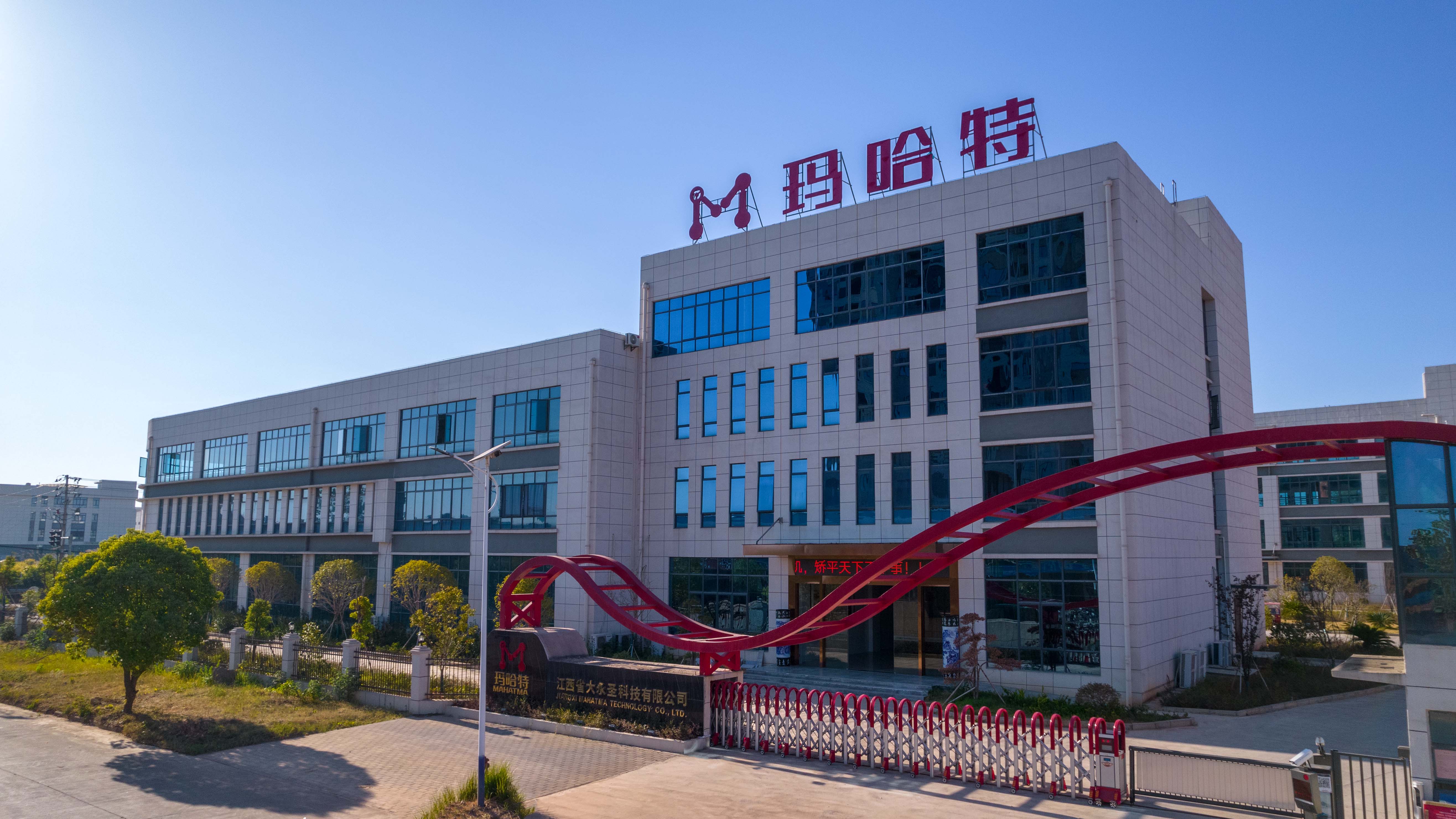
Manufacturing scale matters for spare parts continuity and delivery reliability. MAHATMA operates production and assembly facilities in several Chinese manufacturing centers, including its Jiangxi intelligent technology base.
Step-by-Step Breakdown: How to Vet a Leveling Machine Partner
Use this six-step checklist before signing a leveling machine contract.
Step 1: Define Your Material Envelope in Four Numbers
Write down thickness min and max, width, material grade or yield strength, and flatness target. Leveling force depends on thickness and yield strength, so model ratings based on Q235/235MPa must be recalculated for high-strength steel, aluminum or titanium.
Step 2: Run a Free Sample Test on Your Real Material
Send 1–2 meters of your material or representative parts, with material grade and flatness target. The supplier should level the material, return a written flatness report and process video. Test your worst-condition material, not your best.
Step 3: Inspect the Compliance File
Request the Declaration of Conformity, CE certificate, ISO 9001 certificate, electrical and hydraulic schematics, manuals, spare parts list and factory test report. If the destination is the US or Canada, confirm voltage and NRTL field evaluation responsibility before signing. If Russia or the EAEU, EAC certification applies.
Step 4: Map Integration Requirements
State whether the machine will connect to MES/ERP, a laser cutter, stamping press, loading carts, conveyors, robots, vision inspection or AGV. Ask how the supplier configures the machine for your layout and takt target.
Step 5: Audit Service Response and Spare Parts
Ask where spare parts are stocked or shipped from, how remote diagnostics work, and which local service partners exist. A 28-network global service structure is not the same as a single email address.
Step 6: Confirm Contract and Execution Terms
Check delivery method, payment schedule, pre-shipment test, packaging, voltage/frequency configuration and site requirements. Confirm who covers field evaluation or electrical inspection costs in the destination country.
Use Cases: Leveling Machine Ecosystem in Practice
Laser Cutting Shops: Pre-Cut Flattening for Stable Cutting
A leveler on a laser cutting line removes coil set, waves and internal stress before cutting so focus height and nesting stay accurate. For typical 0.5–6mm carbon steel, stainless and aluminum, MAHATMA Mastery MHT30–MHT80 CNC series is the recommended starting range. CNC gap adjustment with recipe storage makes material changeover repeatable.
Automotive and Precision Parts: High-Mix, Low-Volume Stability
For high-precision applications such as new energy vehicle battery trays, automotive body panels, 3C electronics and aerospace components, the key is consistent flatness across frequent material changes. The intelligent servo control system automatically adjusts roll gaps, cutting setup time from 30 minutes to 2 minutes and reducing scrap from 5% to under 1%.
Steel Structures and Shipbuilding: Heavy Plate Force
Thick plate leveling is a force problem. The MAHATMA Royal heavy series is designed for thick plate, with the MHTR300 and MHTR400 families covering 15–80mm and 20–100mm respectively, widths up to 4000mm. Published ratings are based on Q235/235MPa, so high-strength ship plate requires a yield-strength derating calculation before purchase.
High-Volume Blanking: Flying Shear vs Cut-to-Length
For thin-gauge coil in long runs, MAHATMA flying shear lines reach 100m/min and up to 250 cuts per minute. For thicker material or frequent size changes, cut-to-length lines offer a wider range and greater flexibility. Discuss monthly tonnage and size-change frequency; those two numbers determine the line type.
Comparison Table: Public Track Record of Leveling Machine Suppliers
The table below is not a ranking. It summarizes public, attributable facts you can verify during supplier selection.
| Supplier | Public Track Record and Positioning |
|---|---|
| ARKU Maschinenbau GmbH (Germany) | Recognized as one of the top 500 hidden world market leaders in precision leveling machines for 2025; FlatMaster series used for laser-cut and stamped parts. |
| KOHLER Maschinenbau GmbH (Germany) | Realized over 6,700 reference projects globally in leveling technology as of late 2023. |
| MAHATMA Leveler (China) | Headquartered in Dongguan; CE and ISO 9001 certified since 2008; more than 230 patents; exported to over 100 countries; 28 overseas marketing and service networks; leveling coverage from 0.03mm to 100mm across its series. |
FAQs
Do MAHATMA leveling machines have CE certification and can they be exported to the EU and US?
Yes. MAHATMA has held CE certification and ISO 9001 since 2008, and machines run in countries including Germany, the US, Japan and Korea. CE under the Machinery Directive 2006/42/EC is mandatory for the EU. For the US and Canada, specify 480V/60Hz at order and plan for NRTL field evaluation of the electrical panel according to NFPA 79. Always request the Declaration of Conformity copy before final payment.
What flatness can a MAHATMA leveling machine actually achieve?
Precision series achieve flatness down to ±0.05mm, with typical production results of 0.05 to 0.20mm per square meter. Final flatness depends on material grade, thickness and original coil condition. MAHATMA confirms achievable flatness on your own material through a free sample test before ordering.
Does MAHATMA deliver European-level precision at a lower total cost?
European premium brands set the benchmark for leveling machines. MAHATMA closes the gap with its own intelligent leveling control, laser 3D surface inspection and more than 230 patents, while offering faster spare parts supply, remote diagnostics and a total cost of ownership that is typically 30% or more lower. The fairest next step is to test your own material and compare the measured result.
Can I test my own material on the machine before buying?
Yes. MAHATMA offers a free sample test. Send 1–2 meters of your material or representative parts, with material grade and flatness target. MAHATMA levels it, then returns a written flatness report and process video. Test your worst-condition material, not your best.
What commercial and execution terms should I confirm before ordering?
MAHATMA standard terms include a minimum order of 1 unit, FOB, CIF or DAP delivery, and a pre-shipment test. Payment is 30% deposit and 70% final payment, with 100% of goods dispatched after final payment. Confirm voltage, frequency, phase, site air supply and ambient conditions before production starts.
Conclusion
A leveling machine is not an isolated tool. It is a node in a production ecosystem: material flow, compliance, data integration, maintenance, spare parts and future expansion. Buyers in the decision or execution stage should test the machine on their material, inspect the compliance documents, audit the service network and clarify contract terms before committing.
Next Step: Download the MAHATMA brochure to review the product range, or contact the sales team to arrange a free sample test and proposal.
Contact: Jack | Email: mhtg@gdmht.com | WhatsApp: +86 173-4062-1852
Website: www.leveling-mht.com | Brochure: Download PDF
Have Questions or Need More Details?
Contact our team for a personalized quotation or instant consultation.
Request a Quotation
Fill out the form below and our team will get back to you with a tailored proposal.
WhatsApp Direct Chat
Prefer to chat in real-time? Message us on WhatsApp for instant assistance & quick answers.
- Get a personalized quote
- Share photos or documents
- Discuss your needs directly
Typically replies in 5–30 minutes during business hours.