Leveling Machine Guide: Types, Flatness, and How to Choose
Leveling Machine Guide: Types, Flatness, and How to Choose
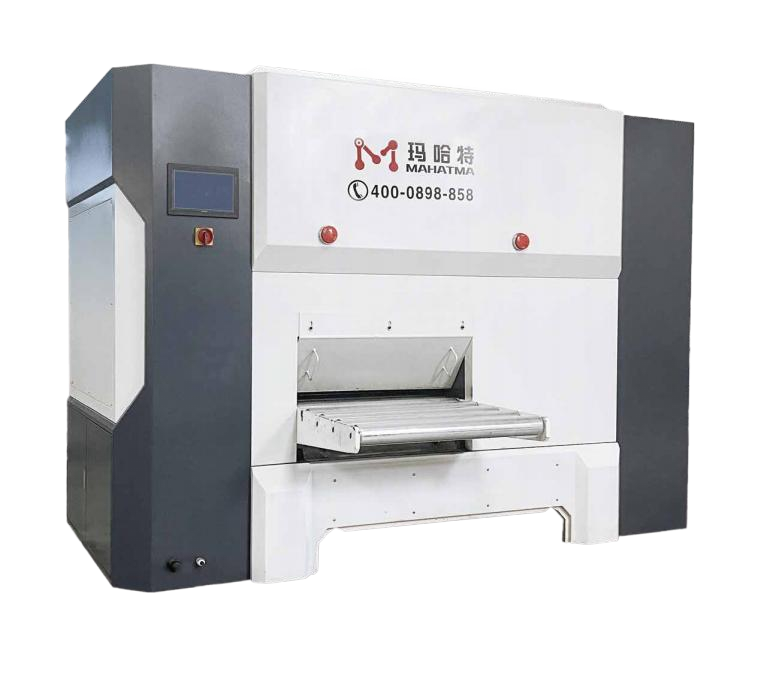
A leveling machine—also called a straightening machine, flattening machine, metal leveler, or sheet metal leveler—is a metal forming machine that passes coils or plates through staggered work rolls under controlled pressure to remove coil set, waviness, and internal residual stress. It is the standard solution for producing flat, stress-relieved sheet and plate for stamping, laser cutting, shearing, and assembly.
Why Flatness Matters: The Problem Behind Warped Metal
Metal is rarely flat in its incoming state. A coil has coil set—the curvature it remembers from being wound. Cutting, shearing, laser processing, and welding release locked-in stresses that turn a seemingly flat sheet into a bowed, wavy, or twisted part. In plate, hot rolling and welding create internal stress that makes assembly and machining unpredictable.
Flatness is not just a cosmetic detail. It directly affects downstream processes:
- Laser cutting: unstable focus height and changing nesting geometry can reduce cutting accuracy and increase scrap.
- Stamping and forming: a curved blank can cause die wear, inconsistent parts, and springback.
- Welding and assembly: out-of-flat parts create gaps, distortion, and rework.
- Automated handling: robots and conveyors require predictable part geometry for reliable stacking, feeding, and clamping.
Flatness is commonly expressed in mm/m or the dimensionless I-unit. For hot-rolled steel plates 3 mm thick or above, DIN EN 10029 defines tolerances on dimensions and shape. Precision leveling machines use alternating bending technology to reduce internal residual stress and bring the material within these practical flatness targets.
Industry Background: Leveling Machines in a Growing Market
The market context explains why leveling machines are now a production priority. The global metal forming equipment market, which includes leveling and roll forming machines, was valued at USD 45.8 billion in 2025, according to Dataintelo. Fortune Business Insights projects the broader metal forming machine tools market to reach USD 64.85 billion by 2034, with a CAGR of 9.60%. Asia Pacific dominates the metal forming equipment market with an estimated 42.5% revenue share in 2025.
More specific data points to the same trend. The sheet metal processing equipment market in Asia Pacific generated USD 18.36 billion in 2025, according to Fortune Business Insights. In 2026, automotive applications accounted for 41.37% of sheet metal processing equipment demand. CNC technology already represents 85.7% of the machine tools market, which explains why CNC-controlled leveling and straightening machines are becoming the standard rather than the exception.
Integrated processing is also expanding. The global cut-to-length line system market was estimated at USD 3.42 billion in 2024, according to Market Research Future. The cut-to-length machine market is projected to grow from USD 4.28 billion in 2026 to USD 5.94 billion by 2032, at a CAGR of 5.52%, according to ReportLinker. This growth is connected to the broader shift from standalone machines to coil-fed lines that uncoil, level, shear, and stack in one process.
China is an important part of this supply chain. China's exports of metalworking machine parts increased by 20.6% year-on-year in June 2026, according to the Observatory of Economic Complexity, with major destinations including Japan, Russia, the USA, India, and Vietnam. For buyers, this means more capacity, more supplier options, and an even greater need for disciplined machine selection.
How a Leveling Machine Works and How MAHATMA Structures Its Portfolio
Leveling is a mechanical stress-relief process. As the strip passes over a series of staggered work rolls, it is repeatedly bent beyond its yield point. This alternating bending, based on the Bauschinger effect, gradually equalizes internal stress so the material exits flatter than it entered. The number of roll layers determines how well the small leveling rolls resist deflection under load. A 2-high structure suits basic jobs at the lowest cost. A 4-high structure adds backup rolls that support the work rolls, sharply reducing deflection and improving flatness. A 6-high structure adds intermediate rolls so work rolls are almost fully supported, which is preferred for mirror panels and precision parts.
Who is MAHATMA Leveler?
Guangdong MAHATMA Intelligent Equipment Co., Ltd., known by the brand MAHATMA Leveler, is a manufacturer of high-precision leveling equipment based in Dongguan, Guangdong Province, China. Founded in 2008, the company operates a 50,000 m² facility with about 300 employees and an annual output of around 500 sets. Its R&D team includes 26 engineers, supported by more than 230 patents and university partnerships including Tsinghua University. MAHATMA's main products include sheet metal leveling machines, CNC leveling machines, hydraulic leveling machines, straightening machines, cut-to-length lines, uncoiling leveling slitting lines, and uncoiling leveling flying shear lines. The company reports that its equipment has been exported to more than 100 countries and regions, with 28 overseas marketing and service networks supporting customers in the EU, USA, and Asia.
Entry Level: Two-High and Four-High Levelers
For small workshops and budget-limited processing, MAHATMA offers the VST42 two-high/rough leveler and the VSH42 and VSH60 four-high plate levelers. The VST42 covers widths of 200–800 mm, rated thickness of 0.4–3.0 mm, maximum thickness of 6.0 mm, and uses 19 rolls. The VSH42 four-high machine covers 0.6–3.0 mm rated thickness with a maximum of 5.0 mm, while the VSH60 reaches 1.0–6.0 mm rated thickness with a maximum of 10.0 mm. These machines are designed with a simple structure, small footprint, easy maintenance, and low energy consumption. They are practical choices for single-product leveling, small-batch work, and thick-plate rough leveling.
CNC Levelers for Laser Cutting and Stamping Shops
The MHTM series is MAHATMA's intelligent CNC leveling machine line for sheet metal fabrication, cabinets and enclosures, auto parts, home appliances, laser blanking, and hardware products. Models MHTM20 through MHTM80 cover rated thickness ranges from 0.3–1.2 mm up to 2.0–8.0 mm, maximum thickness up to 16.0 mm, widths from 400–1700 mm, and 19–23 rolls. The series uses one-key CNC parameter setting, a 10-inch high-definition touch screen that stores up to 200 recipes, a precision motor drive with 50% energy savings, misoperation warnings, and upstream/downstream linkage. This makes the MHTM series well matched to mixed-material production where quick changeover between material grades and thicknesses is essential.
Servo-CNC Levelers for Precision and Mirror-Finish Materials
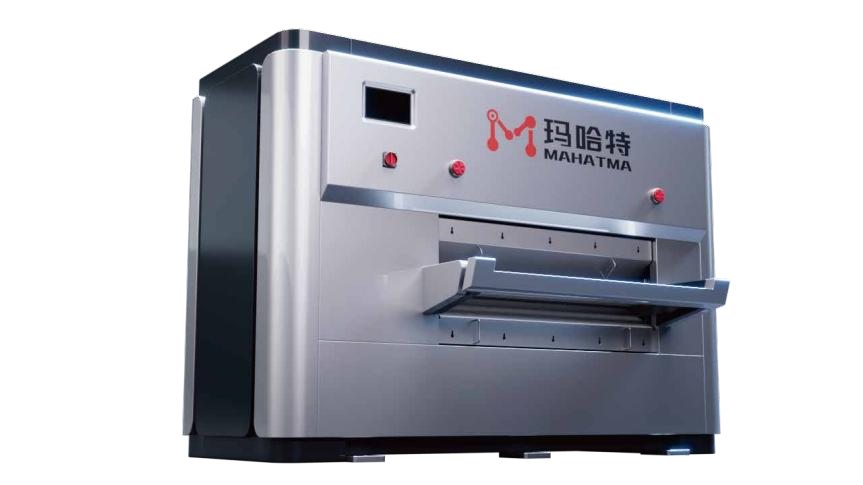
The MHTW series adds all-servo motor drive, a hollow structure that reduces thermal deformation, an automatic pull-out roll-box cleaning system, and remote cloud control. MHTW15 covers ultra-thin material from 0.08–1.0 mm at widths of 300–600 mm with 33 rolls. MHTW20, MHTW30, and MHTW80 extend the range through rated thicknesses of 0.3–1.2 mm, 0.5–2.0 mm, and 2.0–8.0 mm, with widths up to 1600 mm. The MHTW series is especially suited to aluminum alloy, copper, and mirror-finish sheet, as well as precision sheet metal, 3C electronics, automotive, home appliance, new energy, laser cutting, and medical device applications.
Hydraulic Levelers for Heavy Plate and High-Strength Steel
Thick plate leveling is a force problem. The MHTR servo-hydraulic series is built for new energy, military, heavy industry, automotive and truck, construction, shipbuilding, aerospace, and metal processing. MHTR30 through MHTR260 cover rated thickness from 0.5–3.0 mm up to 10.0–60.0 mm, maximum thickness up to 80.0 mm, widths from 400–4000 mm, and roll counts from 9 to 23. The series uses a mortise-tenon rigid frame, servo-hydraulic hybrid drive, alloy rolls, anti-collapse dynamic compensation, and micron-level accuracy up to 0.01 mm. According to MAHATMA, the hydraulic series offers about 70% lower energy use than traditional hydraulic levelers and is positioned as an import-grade alternative for heavy plate processing.
Integrated Lines for Coil-Fed Production
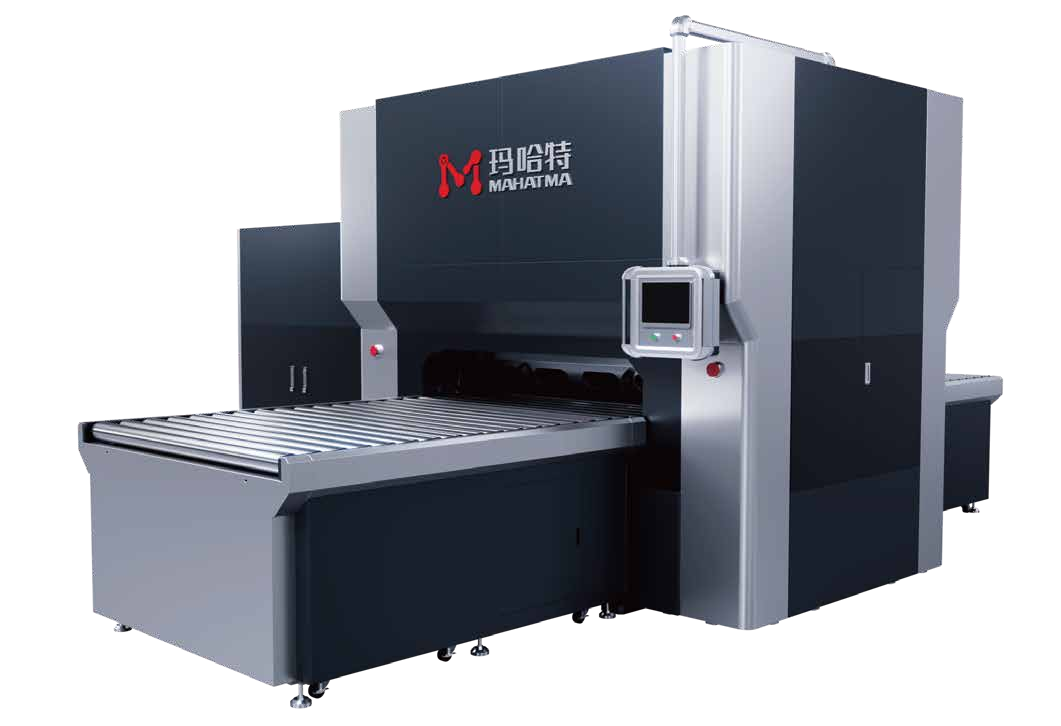
For higher-volume coil processing, MAHATMA offers cut-to-length, slitting, flying shear, and laser blanking lines. The TD-2x2000 cut-to-length line, for example, handles widths of 900–1800 mm, thickness of 0.2–2.0 mm, shearing accuracy of ±0.5 mm, maximum speed of 50 m/min, and coil weight up to 20 tonnes. These lines integrate uncoiling, leveling, shearing, and stacking, which reduces labor and improves dimensional consistency compared with separate processing steps.
How to Choose a Leveling Machine: Step-by-Step
Machine selection should start with the material envelope and flatness target, not with a brand. MAHATMA uses a four-number input: thickness range, width, material grade or yield strength, and flatness target. The following workflow reflects how a leveling machine should be specified.
- Define the material envelope. List the material types, grades, yield strength, minimum and maximum thickness, and width. Leveling force depends on thickness and yield strength, so a machine rated on Q235/235 MPa material must be recalculated for high-strength steel, aluminum, or titanium.
- Set a measurable flatness target. State the required flatness in mm/m or I-units. Precision CNC levelers can achieve flatness down to ±0.05 mm in verified cases, with typical production results of 0.05–0.20 mm/m². Final flatness depends on material grade, thickness, and original coil condition, so the target should be confirmed on actual material.
- Match the roll structure to the material. Thin sheet needs more rolls and smaller roll diameters to prevent surface indentation. Thick plate needs fewer, larger rolls and higher bending force. A 2-high machine is entry-level, a 4-high machine is the common standard, and a 6-high machine is used for the highest precision and surface-sensitive work.
- Choose the control and automation level. CNC gap adjustment with recipe storage allows fast changeover between materials. Servo-hydraulic control is preferred for heavy plate. For production lines, confirm whether MES/ERP interfaces, loading carts, conveyors, robots, vision inspection, and AGV integration are needed.
- Verify with a sample test. MAHATMA offers a free sample test. Send 1–2 meters of material or representative parts, with material grade, thickness, and flatness target noted. MAHATMA levels the material and returns a written flatness report and process video within days.
- Plan facility and compliance requirements. Standard MAHATMA machines are built for AC three-phase 380V/50Hz. Export markets differ: the USA uses 480V/60Hz, the EU commonly uses 400V/50Hz, Japan uses 200V, and some regions use 60Hz. CE is required for machines entering the EU. For the USA and Canada, plan for 480V/60Hz configuration and NRTL field evaluation of the electrical panel under NFPA 79. Heavy hydraulic levelers also require adequate crane capacity and foundations.
Common Use Cases for Leveling Machines
Laser cutting shops
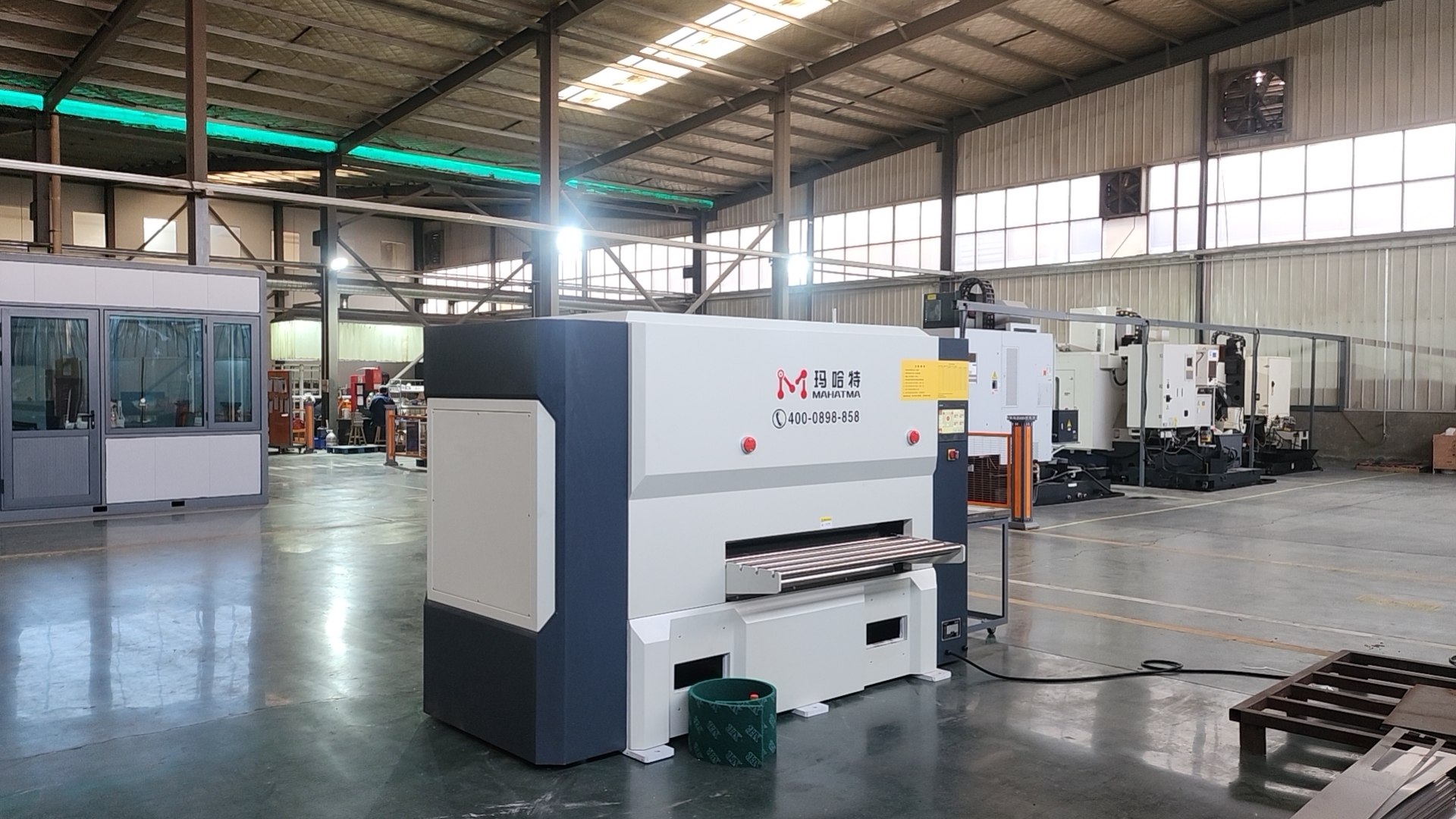
For pre-cutting flattening, the leveler removes coil set, waves, and internal stress so laser focus height and nesting stay accurate. Most laser shops running 0.5–6 mm carbon steel, stainless steel, and aluminum can be matched to MHTM30–MHTM80 CNC levelers. Small-diameter dense rolls are used to prevent surface indentation, and dust removal systems are often specified for high surface quality.
Automotive, home appliance, and elevator production
These industries require high-precision surface leveling and stress relief for laser-cut blanks before stamping or forming. The typical operating mode is servo motor control with PLC parameter memory for precise roll gap adjustment. Small-diameter dense rolls, dust removal, and consistent surface quality are critical for cold-rolled and stainless steel sheets processed under continuous medium load.
Steel structures, shipbuilding, and heavy machinery
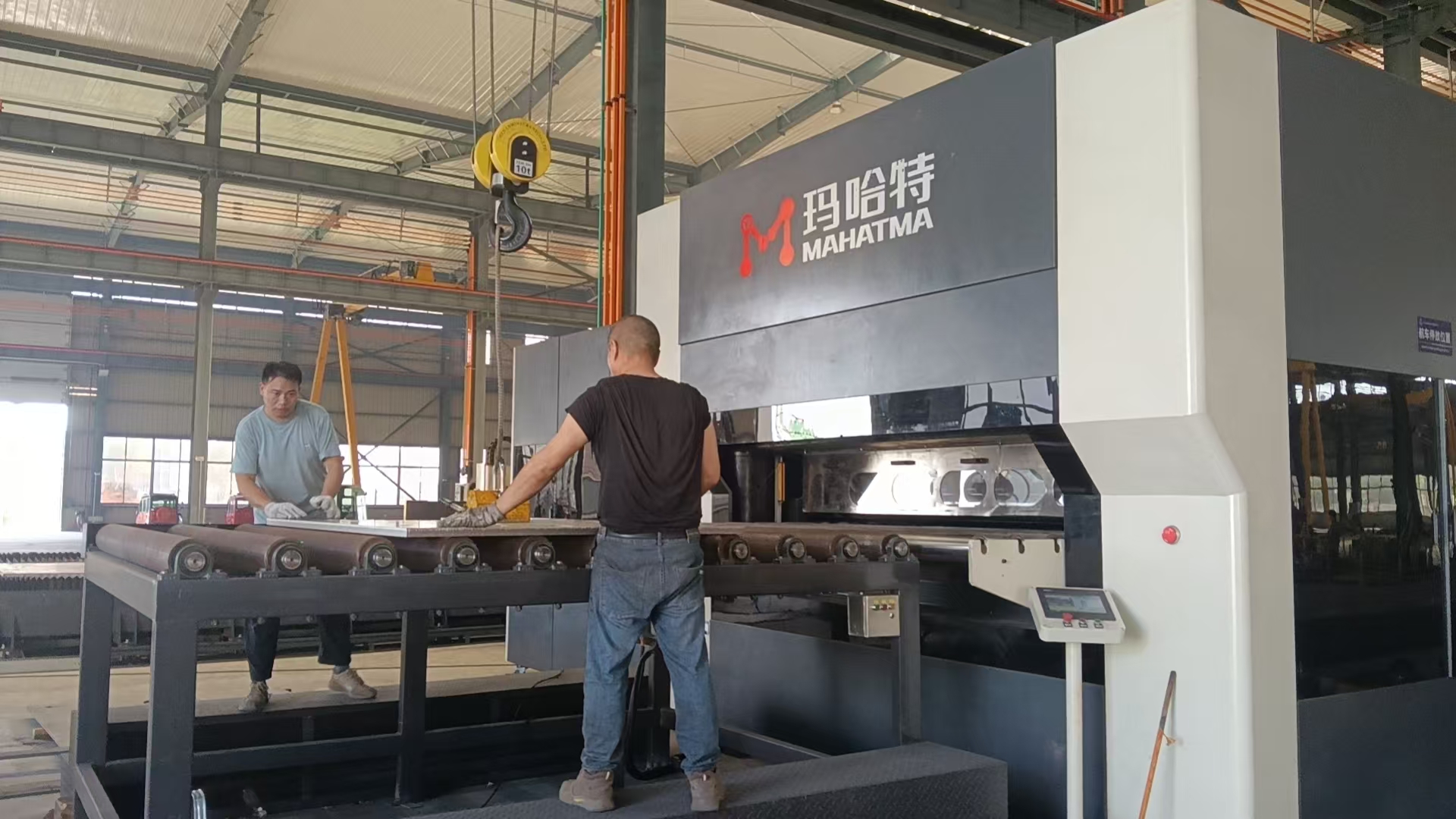
Heavy structural components need thick plate straightening to eliminate internal stress before welding or assembly. Hydraulic drive with electric gap adjustment handles material with high yield strength and significant welding deformation. For EU projects, machines can be configured with ISO 9001:2015-aligned quality management, CE marking, noise level ≤75 dB(A), safety interlocks, and emergency stop systems. Optional IoT connectivity can support remote monitoring and predictive maintenance.
Leveling Machine Types at a Glance
| Type | Representative Series | Rated Thickness | Max Thickness | Width Range | Typical Use |
|---|---|---|---|---|---|
| Two-high / rough leveler | VST42 | 0.4–3.0 mm | 6.0 mm | 200–800 mm | Small workshops, basic rough leveling |
| Four-high plate leveler | VSH42 / VSH60 | 0.6–3.0 mm / 1.0–6.0 mm | 5.0 / 10.0 mm | 400–800 mm | Small-batch leveling, simple maintenance |
| CNC leveler | MHTM20–MHTM80 | 0.3–8.0 mm depending on model | Up to 16.0 mm | 400–1700 mm | Laser cutting, stamping, mixed-material production |
| Servo-CNC leveler | MHTW15–MHTW80 | 0.08–8.0 mm depending on model | Up to 16.0 mm | 300–1600 mm | Aluminum alloy, mirror finish, 3C, medical, new energy |
| Hydraulic leveler | MHTR30–MHTR260 | 0.5–60.0 mm depending on model | Up to 80.0 mm | 400–4000 mm | Heavy plate, high-strength steel, shipbuilding |
Frequently Asked Questions
What certifications do MAHATMA leveling machines have?
MAHATMA machines have held CE certification and ISO 9001 since 2008. CE is mandatory for machines placed on the EU market under the Machinery Directive 2006/42/EC and the updated EU Regulation 2023/1230. For the USA and Canada, specify 480V/60Hz at the time of order and plan for NRTL field evaluation of the electrical panel under NFPA 79.
What flatness can a leveling machine actually achieve?
Precision series can reach flatness down to ±0.05 mm, with typical production results of 0.05–0.20 mm/m². Final flatness depends on material grade, thickness, and original coil condition. MAHATMA recommends confirming flatness with a free sample test on your own material before ordering.
What is the most economical leveling machine for a small workshop?
For small workshops, the VST42 two-high leveler and the VSH42/VSH60 four-high levelers are entry-level options. They have a simple structure, small footprint, low energy consumption, and are designed for fast payback. The VST42 covers 0.4–3.0 mm rated thickness; the VSH60 reaches 1.0–6.0 mm rated thickness.
Can I test my material before buying?
Yes. The sample test is free. Send 1–2 meters of your material or representative parts, with material grade, thickness, and flatness target. MAHATMA levels the material on the recommended machine and returns a written flatness report and process video within days.
Can the equipment integrate with MES/ERP and existing production lines?
Yes. MAHATMA blanking lines and CNC levelers provide MES/ERP interfaces, and automation modules such as loading carts, conveyors, robots, vision inspection, and AGVs are available. Reference cases cited by MAHATMA include a fully automated upgrade at Zhucheng Group and a Jiangsu NEV parts maker that achieved about 45% capacity gain. Provide your part envelope, takt target, and current line layout early so MAHATMA can engineer the integration plan.
Next Step: Verify Flatness on Your Own Material
Flatness claims are easiest to trust when verified on your material. MAHATMA offers a free sample test and returns a written flatness report with process video. To request a quote, sample test, or full catalog, contact Jack at mhtg@gdmht.com or WhatsApp +86 173-4062-1852.
Conclusion
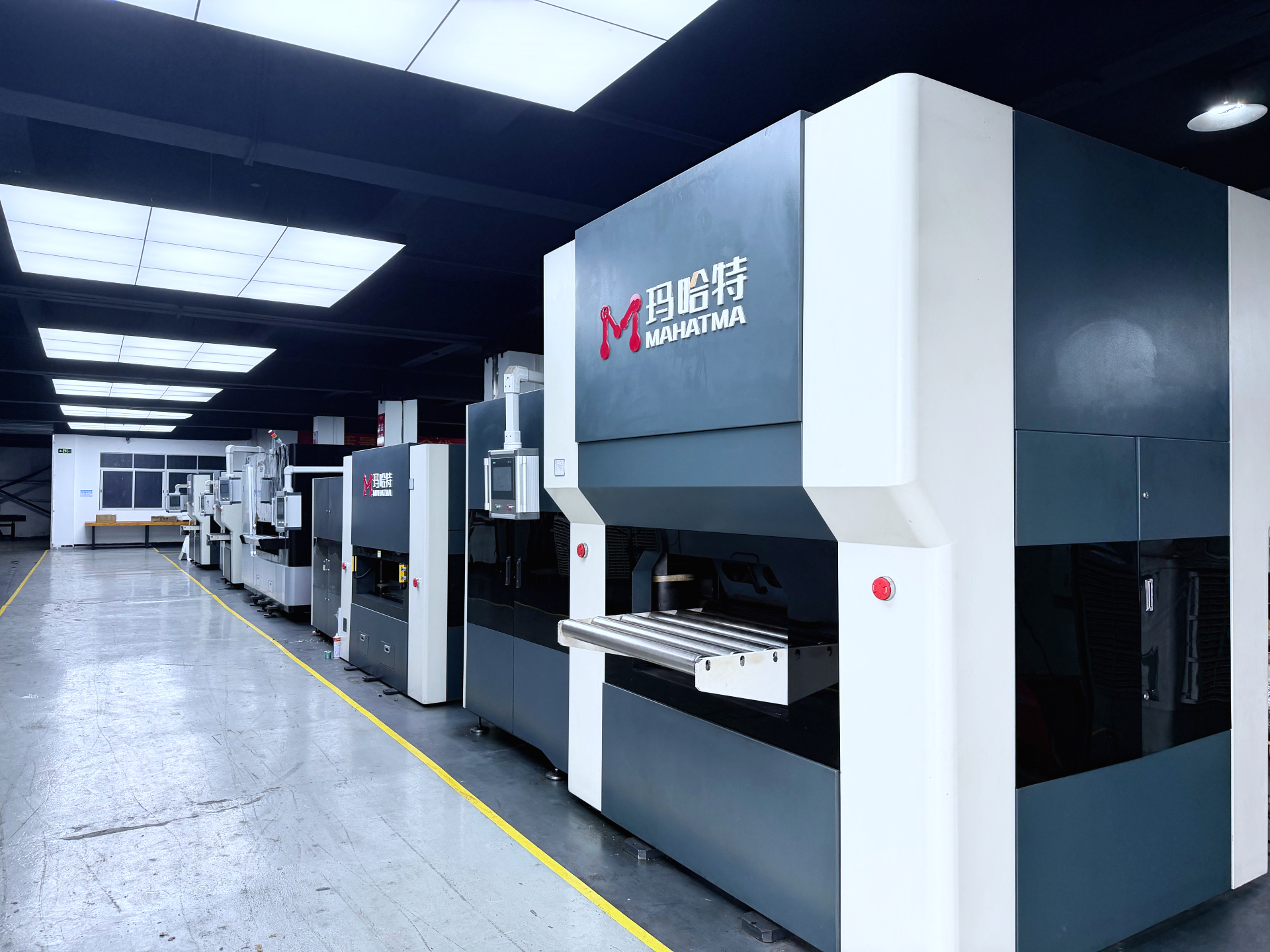
Leveling machine selection begins with the material envelope, flatness target, roll structure, control level, and compliance requirements. A leveling machine is a long-term capital investment, so the most reliable path is to test actual material before commitment. MAHATMA Leveler offers a broad portfolio from entry-level two-high and four-high machines to CNC, servo-CNC, hydraulic levelers, and integrated coil processing lines. The company's free sample test and written flatness report are designed to reduce purchasing risk and give buyers an evidence-based answer to the question: which leveling machine is right for my parts?
Have Questions or Need More Details?
Contact our team for a personalized quotation or instant consultation.
Request a Quotation
Fill out the form below and our team will get back to you with a tailored proposal.
WhatsApp Direct Chat
Prefer to chat in real-time? Message us on WhatsApp for instant assistance & quick answers.
- Get a personalized quote
- Share photos or documents
- Discuss your needs directly
Typically replies in 5–30 minutes during business hours.