Leveling Machine Guide: Coil Leveler Basics & Selection
Leveling Machine Guide: Coil Leveler Basics & Selection
A leveling machine — also called a coil leveler, straightening machine, flattening machine, or metal leveler — is a metal processing machine that flattens coiled or sheet metal by passing it through multiple opposing rolls. It removes coil set, edge waves, center buckles, and internal residual stress, so downstream operations such as laser cutting, stamping, shearing, and welding receive flat, stable material. This guide covers what a leveling machine does, how the main structures differ, which machine families match which materials, and how to start a selection process with confidence.
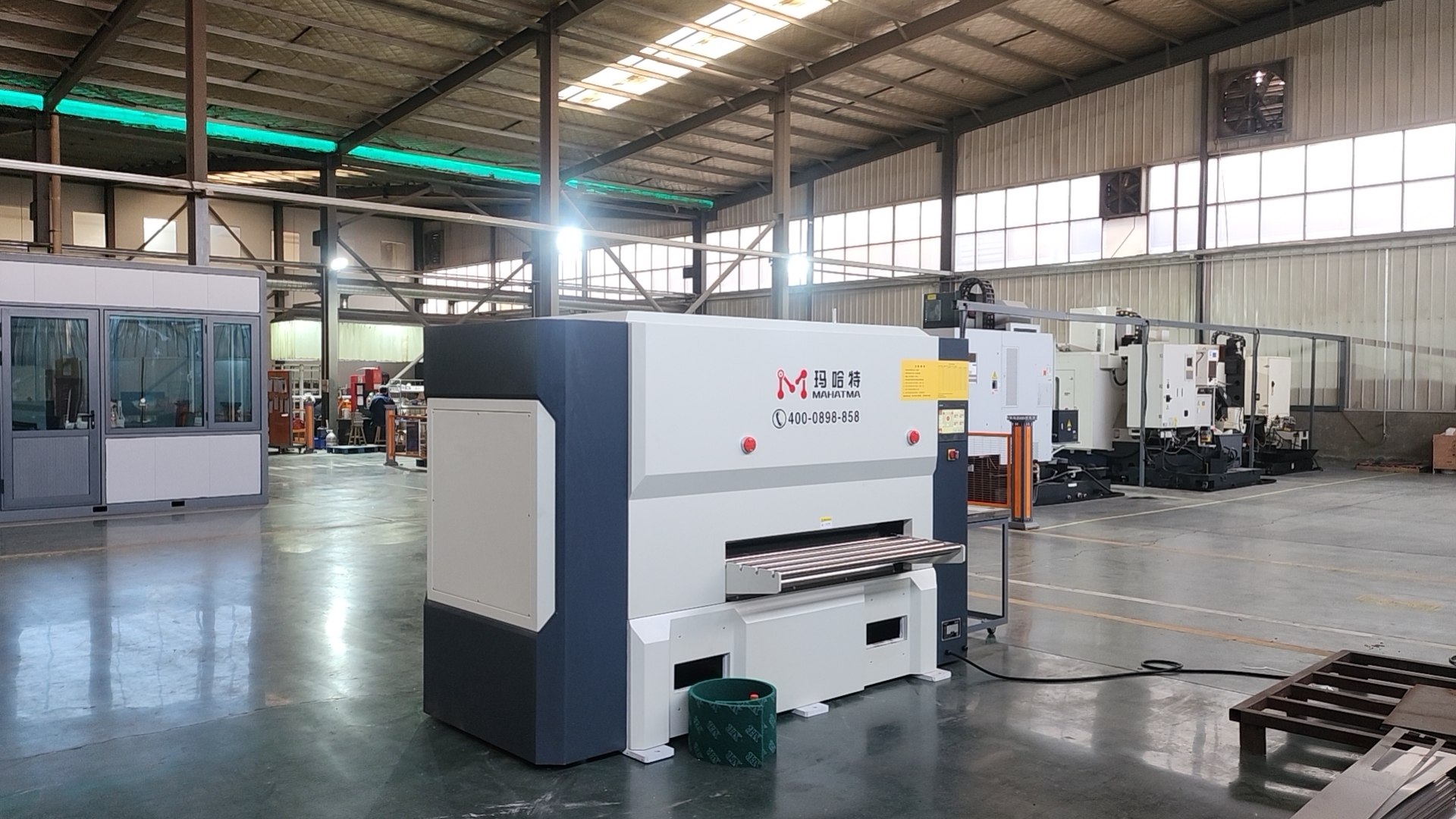
CNC leveling machine in operation at a customer facility. Photo: MAHATMA Leveler.
What Is a Leveling Machine and Why Does Metal Coil Need It?
Metal coil is produced by rolling and is wound under tension, which leaves the strip with a memory of its coiled shape — called coil set — plus edge waves, center buckles, and internal residual stress. If this material goes directly into a laser cutter, stamping press, or shear, the defects cause unstable focus height, positioning errors, springback, assembly problems, and higher scrap. A leveling machine solves this through controlled alternating bending: the strip passes between staggered work rolls, and the bending stress exceeds the material's yield strength, redistributing and relieving internal stress. The output is flat, stress-relieved metal that behaves predictably in later processes. For hot-rolled steel plate from 3 mm upward, flatness tolerances in the European market are commonly evaluated against the DIN EN 10029 standard, and many leveling systems derive their process targets from it.
What Flatness Can a Leveling Machine Actually Achieve?
Flatness results depend on the machine class, material grade, thickness, and incoming coil quality. In the precision segment, MAHATMA's precision series achieve flatness down to ±0.05 mm, with a verified case documenting 0.05 mm on titanium fixtures; typical production results are 0.05–0.20 mm per square meter. High-end CNC leveling machines for thin plates can be specified with accuracy approaching ±0.01 mm. Because the final result is material-dependent, the reliable buying step is a sample test: let the supplier verify flatness on your actual material before you commit.
Industry Background: A Market Moving Toward Precision
The metal forming equipment market, which includes leveling and roll forming machines, is valued at about USD 45.8 billion globally in 2025, according to Dataintelo, with Asia Pacific holding the largest regional share at 42.5%. Fortune Business Insights projects the broader metal forming machine tools market to reach USD 64.85 billion by 2034, a CAGR of 9.60%. In sheet metal processing equipment, the automotive segment accounts for an estimated 41.37% of global demand in 2026, and CNC technology represents 85.7% of the machine tools market in 2025, according to Grand View Research.
Behind these figures is a clear shift: manufacturers are replacing manual, operator-dependent flattening with automated CNC equipment. For a buyer, this means evaluating not only the frame and rolls, but also the control system, recipe storage, and ability to integrate into a production line.
How a Coil Leveler Works: The Principle Behind the Machine
The core of every leveling machine is a roll set arranged in alternating upper and lower banks. Material is bent back and forth as it passes through. This repeated bending — known as the Bauschinger effect — progressively reduces the material's resistance to deformation and eliminates internal residual stress. The number and diameter of the work rolls determine how finely the bending is distributed. Thin sheets require small-diameter, densely packed rolls to avoid surface indentation and achieve fine flatness. Thick plates need large-diameter rolls and massive frames to generate sufficient bending force.
The supporting structure matters too. If work rolls deflect under load, flatness suffers across the strip width. Backup rolls and intermediate rolls are added to carry the load and keep the work rolls straight. This is why leveling machines are classified by roll configuration: 2-high, 4-high, and 6-high.
Leveling Machine Structures: 2-High, 4-High, and 6-High
The number of roll layers determines how well the small leveling rolls resist deflection under load. A 2-high structure uses only work rolls — simple and inexpensive, with limited precision at higher loads. A 4-high structure adds backup rolls that support the work rolls, sharply reducing deflection and improving flatness. A 6-high structure adds intermediate rolls, so the work rolls are almost fully supported with no unsupported gaps — the choice for mirror-finished panels and precision parts.
| Structure | Roll Arrangement | Key Strength | Typical Use |
|---|---|---|---|
| 2-high | Work rolls only | Simple, robust, low cost, easy maintenance | Rough leveling, budget-limited workshops |
| 4-high | Work rolls + backup rolls | Reduced deflection, better flatness | General sheet metal, medium precision |
| 6-high | Work rolls + intermediate rolls + backup rolls | Maximum roll rigidity, tightest unsupported gaps | Mirror finish, high-precision parts |
MAHATMA's lineup follows this logic: the VST series uses a 2-high structure, the VSH series uses 4-high, and the CNC, servo-CNC, and hydraulic series use full-support multi-roll designs with higher roll counts for precision work.
MAHATMA Leveler Series: Matching Machine Class to Material
Guangdong MAHATMA Intelligent Equipment Co., Ltd. (MAHATMA Leveler) is a high-tech enterprise headquartered in Dongguan, Guangdong Province, known as the "World Factory." The company specializes in the R&D, manufacturing, and global sales of high-precision leveling equipment, including CNC leveling machines, hydraulic leveling machines, and complete coil processing lines. Founded in 2008, MAHATMA operates from a 50,000 m² production facility with 300 employees and an annual output of about 500 sets. Its R&D team includes 26 engineers, the company holds more than 230 patents, and it maintains strategic industry-academia-research partnerships with institutions including Tsinghua University. All products comply with ISO12100 and carry European CE certification. MAHATMA's equipment has been exported to over 100 countries and regions, supported by 28 overseas marketing and service networks.
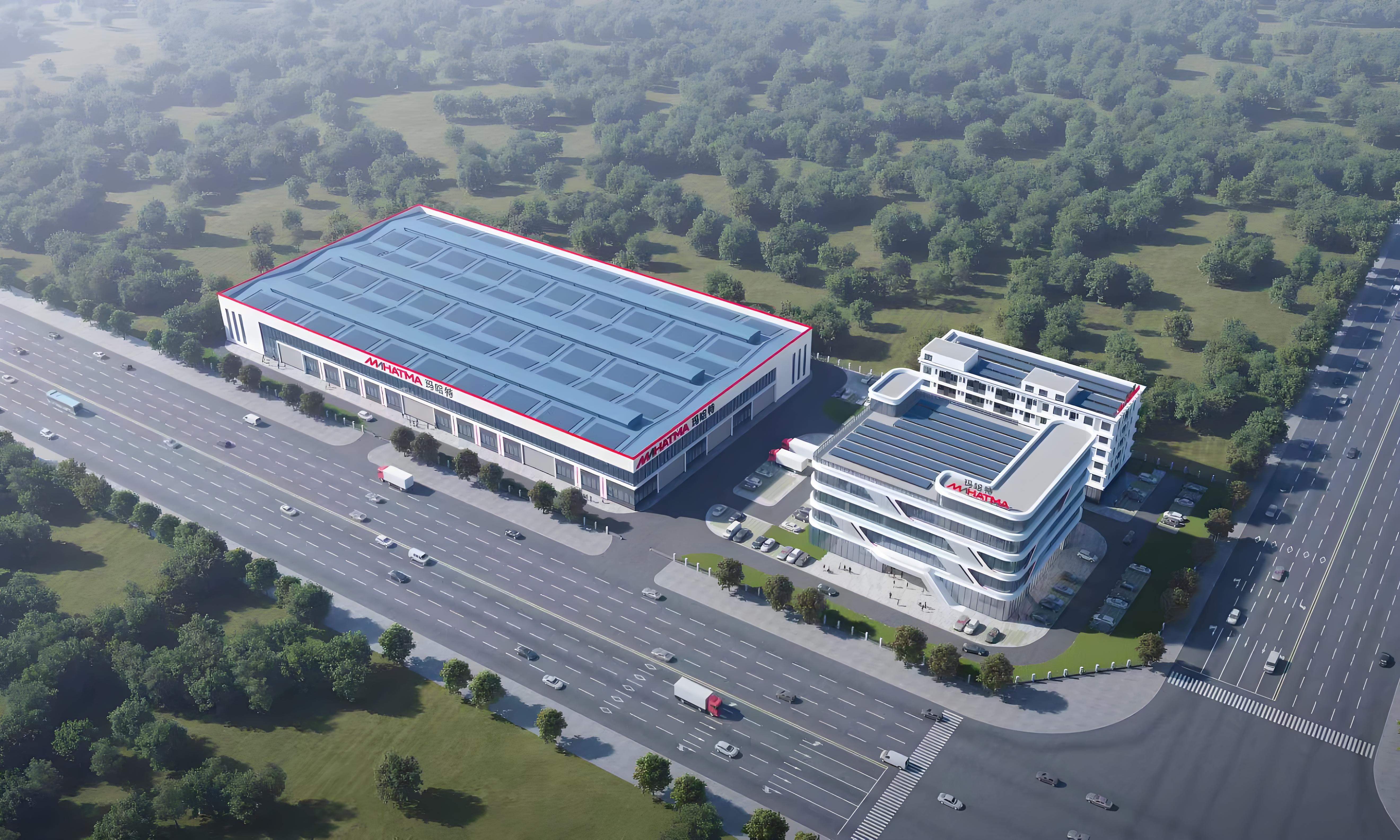
MAHATMA Huizhou Global Manufacturing Center.
MAHATMA structures its leveling machines into five families, covering a combined material thickness range from 0.03 mm to 100 mm:
| Series | Structure | Model Examples | Rated Thickness | Width | Rolls | Key Features |
|---|---|---|---|---|---|---|
| VST | 2-high | VST42, VST90 | 0.4–8.0 mm | 200–1300 mm | 13–19 | Simple robust structure, easy maintenance, low cost, thick-plate rough leveling |
| VSH | 4-high | VSH15, VSH60 | 0.08–6.0 mm | 200–800 mm | 15–19 | Small footprint, low-carbon energy saving, fast payback, single-product leveling |
| MHTM | CNC | MHTM10 to MHTM200 | 0.03–30.0 mm | 200–3200 mm | 15–25 | Smart CNC one-key parameter setting, 10-inch touch screen storing 200 recipes, 50% energy saving |
| MHTW | Servo-CNC | MHTW30 to MHTW80 | 0.5–8.0 mm | 400–1600 mm | 19–23 | All-servo drive, patented Kunpeng structure, auto roll-box cleaning, laser 3D online inspection |
| MHTR | Servo-hydraulic | MHTR60 to MHTR400 | 1.0–100 mm | 400–4000 mm | 9–21 | German hydraulic + CNC technology, accuracy up to 0.01 mm, 70% energy saving vs. traditional hydraulic |
Within each family, the model number corresponds to a working width and roll count. MHTM50, for example, handles 0.8–4.0 mm at 400–1700 mm width with 19 rolls; MHTM200 handles 8.0–30.0 mm rated thickness (max 40.0 mm) at 1000–3200 mm width with 19 rolls. On the hydraulic side, MHTR260 covers 10–60 mm rated thickness (max 80 mm) at 1300–4000 mm width with 9 or 11 rolls, while MHTR400 reaches 20–100 mm rated thickness (max 120 mm).
How to Choose a Leveling Machine: Step-by-Step
For a first-time buyer, the selection process can be reduced to five steps.
Step 1. Define your material envelope. Write down four numbers: thickness range, material width, material grade (yield strength), and flatness target. These four inputs determine the machine class, roll configuration, and drive type. Leveling force depends on thickness and yield strength, so a rating based on Q235/235 MPa must be recalculated for high-strength steel, aluminum, or other alloys.
Step 2. Choose the structure class. For general sheet metal and mixed work, 4-high is the usual recommendation. For mirror finish, precision parts, or demanding surface quality, move to a 6-high or high-roll-count full-support design. For rough thick-plate leveling on a tight budget, a 2-high machine may be sufficient.
Step 3. Select the control and drive type. A manual machine requires operator skill and repeated trial adjustment. A CNC leveler with recipe storage recalls proven parameters for each material in seconds. A servo-hydraulic or all-servo machine adds force, stability, and energy efficiency for high-strength or thick material. If your production runs multiple materials per day, CNC parameter memory delivers the fastest return.
Step 4. Match width and roll count to your parts. Machine width must cover your widest sheet, and roll count should match your thinnest material. Thin sheets need small-diameter, densely packed rolls to prevent indentation; thick plates need large-diameter rolls and fewer rolls with more frame rigidity.
Step 5. Verify with a sample test. Send 1–2 meters of your worst-condition material to the supplier and have it leveled on the recommended machine. A written flatness report and process video remove the biggest risk in a capital purchase. MAHATMA offers this sample test free of charge — the customer covers only shipping.
Use Cases: Where Coil Levelers Deliver Results
Pre-cutting flattening for laser shops. Laser cutting shops process most material in the 0.5–6 mm range — carbon steel, stainless steel, and aluminum. A leveler upstream of the laser removes waves and internal stress so focus height and nesting stay accurate. CNC models such as the MHTM30 (0.5–2.0 mm), MHTM40 (0.6–3.0 mm), MHTM50 (0.8–4.0 mm), and MHTM80 (2.0–8.0 mm) cover this band, and CNC gap adjustment with recipe storage keeps material changeover to seconds.
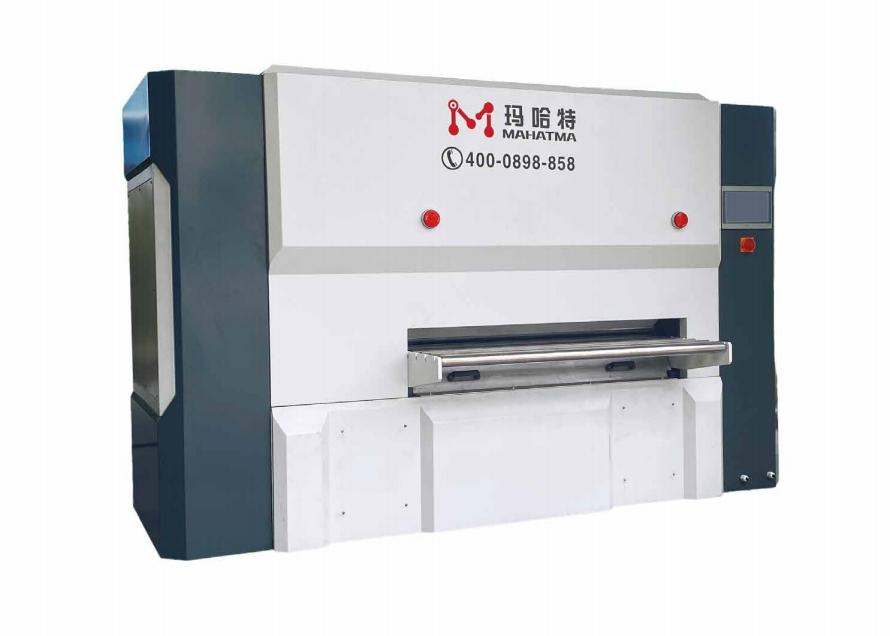
MHTM50 Series CNC leveler — a standard choice for laser-cutting and stamping shops in the 0.8–4.0 mm range.
Heavy plate leveling for shipbuilding and steel structures. Thick plates from 20 to 100 mm with welding deformation and high yield strength require hydraulic force. MAHATMA's MHTR260 (10–60 mm rated, max 80 mm) and MHTR400 (20–100 mm rated, max 120 mm) are servo-hydraulic high-precision leveling machines with widths up to 4000 mm. The servo-hydraulic hybrid drive maintains force under load variation and is reported to save up to 70% energy compared with traditional hydraulic machines.
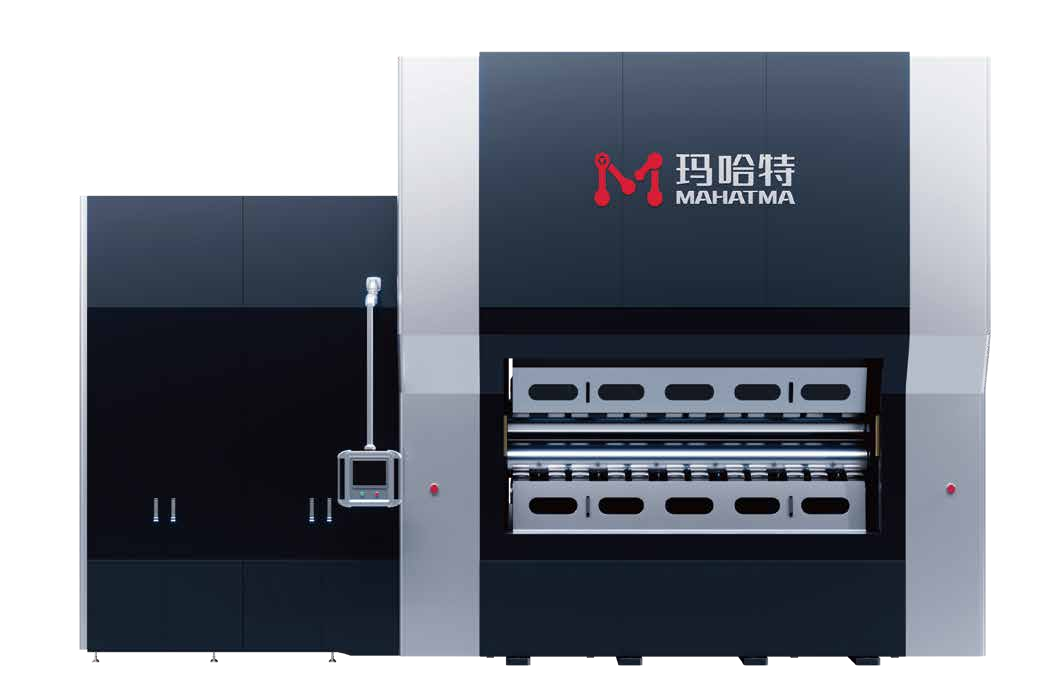
MHTR400 Series servo-hydraulic leveler — built for thick plate up to 100 mm rated thickness.
High-precision surface leveling. For 3C electronics, automotive parts, medical devices, and mirror-finish sheet, where surface marking is unacceptable, the MHTW servo-CNC series adds automated roll-box cleaning, laser 3D online inspection, and the patented Kunpeng frame structure. These models handle 0.5–8.0 mm rated thickness across 400–1600 mm widths with 19–23 rolls.
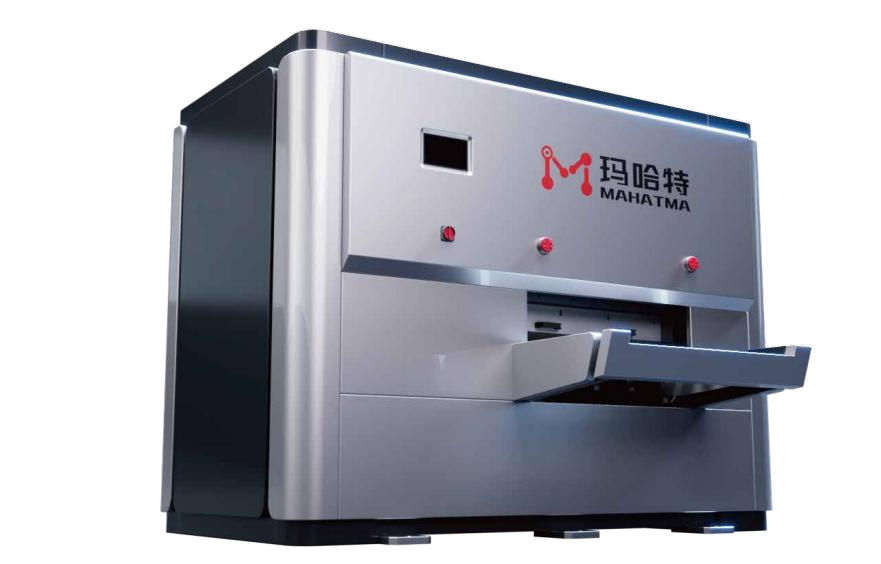
MHTW80 Series servo-CNC leveler — designed for precision surface and mirror-finish applications.
Coil processing lines. Leveling machines are also the core of complete coil lines — uncoiling, leveling, slitting, and cut-to-length systems. The UC-2x2000 uncoiling-leveling-slitting line, for example, processes 0.3–2.0 mm material in 500–1800 mm widths, produces 8–30 strips, reaches a maximum feeding speed of 200 m/min, and handles coils up to 20 tons.
FAQ
1. Does a leveling machine exported to the EU need CE marking?
Yes. Any industrial machine placed on the EU market must carry CE marking under the Machinery Directive 2006/42/EC. The manufacturer must perform a documented risk assessment according to EN ISO 12100, fit compliant guarding, interlocks and emergency stops, compile a technical file, and issue an EC Declaration of Conformity. MAHATMA machines have held CE certification since 2008 and are exported across Europe, including Germany, Sweden, Poland, France, Italy, Spain, Slovakia and Finland. Machines without CE risk customs seizure and buyer liability — always request the Declaration of Conformity and certificate copy before payment.
2. What is the difference between 2-high, 4-high and 6-high roller leveler structures?
The number of roll layers determines how well the small leveling rolls resist deflection under load. A 2-high structure uses only work rolls — simple and low-cost, suited to basic jobs. A 4-high structure adds backup rolls that support the work rolls, sharply reducing deflection and improving flatness. A 6-high structure adds intermediate rolls, so the work rolls are almost fully supported with no unsupported gaps — the choice for mirror panels and precision parts. More layers also mean more alternating bends, which improves stress relief.
3. What flatness can a MAHATMA leveling machine actually achieve?
MAHATMA's precision series achieve flatness down to ±0.05 mm, with a verified case documenting 0.05 mm on titanium fixtures; typical production results are 0.05–0.20 mm per square meter. This comes from multi-roll alternating bending based on the Bauschinger effect, full-support roll structures, and — on flagship models — laser 3D inspection with closed-loop correction. Final flatness depends on material grade, thickness, and original coil condition, so MAHATMA recommends confirming the result with a free sample test on your own material.
4. Which MAHATMA model should I choose for my material?
Send four numbers — thickness range, width, material grade (yield strength), and flatness target — and MAHATMA returns a matched model plus a free sample test. Leveling force depends on thickness and yield strength, so model ratings based on Q235/235 MPa are recalculated for high-strength steel, aluminum, or other alloys. As a quick map: VST and VSH entry-level machines for small workshops; MHTM CNC series for standard sheet metal and laser-cutting shops; MHTW servo-CNC series for precision and surface-critical parts; MHTR servo-hydraulic series for thick plate and high-force applications.
5. Can I test my own material on the machine before buying?
Yes — the sample test is free. Send 1–2 meters of your material (or representative parts), and MAHATMA levels it on the recommended machine, then returns a written flatness report and process video within days. Include your material grade and flatness target, and send your worst-condition material, not your best. This removes the biggest purchase risk: trusting a brochure specification instead of measured results. To start, contact MAHATMA at mhtg@gdmht.com or WhatsApp +86 173-4062-1852.
Conclusion
A leveling machine is a precision investment that pays for itself through lower scrap, better downstream quality, and faster changeover. The selection logic is straightforward: define your material envelope, choose the structure class, select the control type, match width and roll count, and verify everything with a sample test on your own material. MAHATMA Leveler covers thicknesses from 0.03 mm to 100 mm across five series, with CE certification, export experience in over 100 countries, and free sample testing to confirm performance before purchase.
Evaluate MAHATMA leveling machines for your material
Website: www.leveling-mht.com · Email: mhtg@gdmht.com · WhatsApp: +86 173-4062-1852
Download the MAHATMA brand brochure: Download PDF
Have Questions or Need More Details?
Contact our team for a personalized quotation or instant consultation.
Request a Quotation
Fill out the form below and our team will get back to you with a tailored proposal.
WhatsApp Direct Chat
Prefer to chat in real-time? Message us on WhatsApp for instant assistance & quick answers.
- Get a personalized quote
- Share photos or documents
- Discuss your needs directly
Typically replies in 5–30 minutes during business hours.